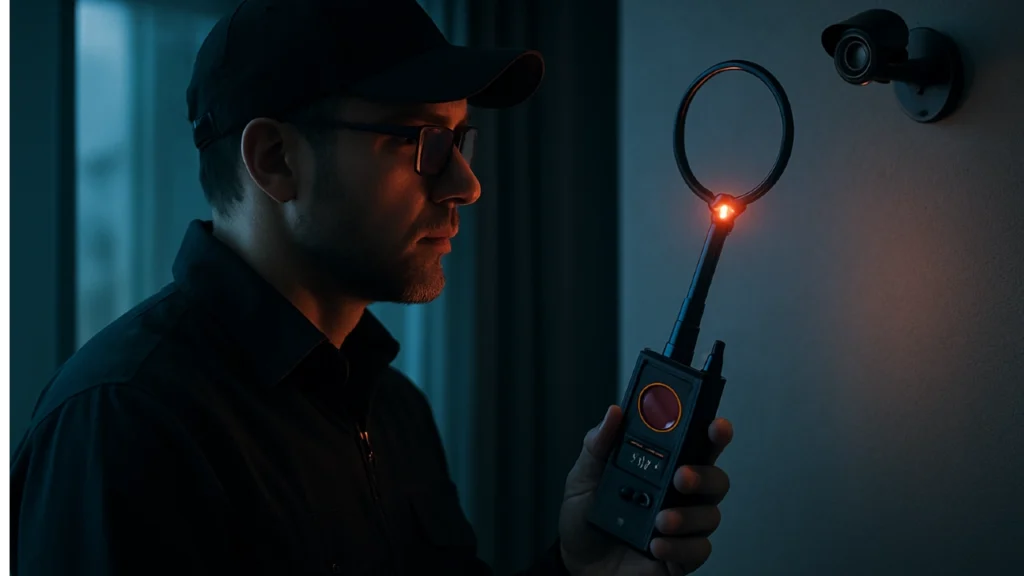
Protect Your Privacy: The Ultimate Guide to Electronic Bug Sweeps and TSCM
In our highly connected, technology-driven world, the expectation of privacy is increasingly under threat. The rapid advancement and miniaturization of surveillance technology have made it incredibly easy—and frighteningly inexpensive—for almost anyone to purchase and deploy covert electronic bugs. From suspicious spouses and overzealous business competitors to stalkers and corporate spies, bad actors no longer need specialized government connections to access military-grade surveillance capabilities. Today, a device roughly the size of a coin can capture your most intimate conversations, stream live video of your private spaces, or track your every movement.
If you suspect you are being monitored, ignoring the problem will not make it go away. Protecting your personal and professional privacy requires proactive, expert intervention. Metro Detective Agency specializes in Technical Surveillance Countermeasures (TSCM)—commonly known as electronic bug sweeps. Our highly trained investigators use advanced, military-grade detection equipment to identify covert threats, neutralize them, and restore your peace of mind.
The Modern Threat of Electronic Eavesdropping
Historically, electronic eavesdropping was the domain of law enforcement, government intelligence agencies, and high-level corporate espionage rings. Today, the landscape has drastically changed.
Why is Electronic Surveillance Increasing?
- Accessibility and Affordability: Covert listening devices, hidden cameras, and GPS trackers that used to cost thousands of dollars can now be purchased online for less than $50.
- Miniaturization: Microchips and camera lenses have become so small that they can be seamlessly integrated into everyday objects like USB chargers, smoke detectors, ink pens, air fresheners, and even functional power outlets.
- Connectivity: Modern bugs no longer rely solely on limited-range radio frequencies. Many leverage cellular data (GSM bugs) or local Wi-Fi networks to stream high-definition audio and video globally in real-time.
- Extended Battery Life: Advancements in lithium-ion batteries and motion/voice-activation technology mean a hidden device can remain dormant for weeks or months, only powering on when someone enters the room or begins speaking.
Common Types of Electronic Bugs
To understand how professional electronic bug sweeps work, it is important to know what our TSCM experts are looking for.
Audio Transmitters (Listening Devices):
These devices capture ambient sound and transmit it to a receiver. They can be hardwired into a building’s electrical system for infinite power or rely on internal batteries. Some use standard Radio Frequency (RF), while others use GSM technology (essentially acting as a tiny, hidden cell phone that automatically answers silently when called by the eavesdropper).
Covert Video Cameras:
Hidden cameras compromise visual privacy. They can be “pinhole” cameras requiring a lens opening no larger than a grain of sand. They are often disguised as everyday household or office items and can record to local MicroSD cards or stream live via Wi-Fi.
GPS Tracking Devices:
Used to monitor the location and movement of vehicles or assets. These battery-powered devices are typically attached covertly to the undercarriage of a vehicle using high-strength magnets and transmit real-time location data via cellular networks.
Dormant or “Burst” Transmitters:
These are highly sophisticated devices designed to evade detection. Instead of transmitting a continuous signal, they record data and store it, then transmit that data in a rapid “burst” (taking only a fraction of a second) before going silent again.
Wiretaps and Line Eavesdropping:
Though landlines are less common today, VoIP (Voice over Internet Protocol) and traditional phone lines can still be compromised. Hardware can be attached to the physical line inside or outside the premises to intercept calls.
Warning Signs That You Might Be Bugged
How do you know if you need an electronic bug sweep? While some victims have no idea they are being monitored until it is too late, eavesdroppers often leave subtle clues behind.
- Others Know Your Secrets: The most obvious sign is when a competitor, estranged spouse, or adversary suddenly knows confidential information, future strategies, or personal details that were only discussed in private.
- Strange Interference: You notice unusual static, popping, or volume drops on your communication devices, or persistent interference on your television or radio.
- Unusual Object Placement: You notice items in your home or office that you did not purchase (like a new clock, power strip, or USB charger), or familiar items appear to have been moved slightly.
- Signs of Trespassing (With Nothing Stolen): You suspect someone has been in your home, office, or vehicle, but no valuables are missing. Eavesdroppers often break in purely to plant or retrieve devices.
- Debris or Wall Modifications: You notice small amounts of plaster dust on the floor, discolored ceiling tiles, or electrical wall plates that look slightly crooked or different.
- Unexpected Gifts: A competitor, vendor, or estranged partner gifts you an electronic device, desk ornament, or appliance.
The Danger of DIY Bug Sweeping
When people suspect they are being bugged, their first instinct is often to buy a cheap “RF detector” or “bug sweeper” online. This is a dangerous mistake that can provide a false sense of security.
Commercially available bug detectors from online retailers are generally ineffective against modern threats. They are prone to constant false positives—beeping wildly at your Wi-Fi router, your neighbor’s Bluetooth speaker, or nearby cell towers. More importantly, cheap DIY sweepers only detect continuous radio frequencies. If a bug is turned off, voice-activated, recording to a local SD card, or operating on a frequency outside the toy detector’s range, the DIY device will miss it entirely.
Protecting your privacy requires commercial-grade, highly calibrated equipment operated by trained investigators who understand the physics of radio waves and the tradecraft of covert surveillance.
The Professional Electronic Bug Sweep Process (TSCM)
When you contact Metro Detective Agency, we deploy a comprehensive, multi-layered approach to secure your environment. Our electronic bug sweep relies on advanced detection equipment and systematic methodologies to leave no stone unturned.
1. Thorough Physical/Visual Inspection
Technology is only half the battle. Our seasoned investigators conduct a meticulous, inch-by-inch physical search of the environment. We look for signs of unauthorized entry, hidden wires, manipulated electrical outlets, and objects that don’t belong. We examine furniture, drop ceilings, baseboards, and ductwork.
2. Radio Frequency (RF) Spectrum Analysis
Using professional-grade spectrum analyzers, we scan the entire radio frequency spectrum (from extremely low frequencies to ultra-high frequencies). This allows us to identify, isolate, and trace any unauthorized signals transmitting from the premises, including Wi-Fi, Bluetooth, cellular, and traditional RF bands. We analyze the digital fingerprint of every signal in the room to separate legitimate devices from hostile bugs.
3. Non-Linear Junction Detection (NLJD)
This is where professional TSCM vastly outperforms DIY methods. An NLJD emits a directed signal that bounces off semiconductor junctions (the tiny electronic components found in computer chips and circuit boards). This allows our investigators to locate electronic bugs even if they are turned off, out of battery, or recording passively without emitting a signal. If it has a circuit board, the NLJD will find it—even if it’s buried inside a wall.
4. Thermal Imaging Inspection
Electronic devices consume power and generate heat. Using high-resolution thermal imaging cameras, we scan walls, ceilings, and objects for microscopic heat signatures that betray the presence of hidden, active electronics.
5. Telecommunications and Network Analysis
We inspect telephone lines and data cables for physical wiretaps. We can also evaluate your Wi-Fi network and internet routers for unauthorized devices, rogue access points, or data exfiltration methods.
Who Needs Professional TSCM Services?
Electronic bug sweeps are a crucial privacy protection measure for a wide variety of clients:
- Corporate Executives & Business Owners: Protecting trade secrets, intellectual property, merger and acquisition details, and strategic planning from corporate espionage.
- Individuals in High-Stakes Litigation: Those going through contentious divorces, child custody battles, or civil lawsuits where the opposing party may seek an unfair advantage.
- High-Net-Worth Individuals & Celebrities: Protecting personal privacy, financial information, and family security from stalkers, paparazzi, or extortionists.
- Tenants & Homeowners: Ensuring landlords, previous owners, or creepy maintenance workers haven’t installed hidden cameras in bedrooms or bathrooms.
- Victims of Stalking and Harassment: Restoring a sense of safety by ensuring homes, vehicles, and personal devices are free from hostile tracking.
What to Do If You Suspect You Are Being Bugged
If you believe your privacy has been compromised, your immediate actions are critical.
- Do Not Discuss Your Suspicions in the Suspected Area: If you are being monitored, talking about a bug sweep will tip off the eavesdropper. They may remotely turn off the device or break in to remove it before we arrive, destroying vital evidence.
- Do Not Call from a Suspect Phone or Location: Leave the premises (home, office, or vehicle) that you believe is compromised. Use a secure phone—like a newly purchased pre-paid phone or a trusted friend’s device—to contact investigators.
- Do Not Attempt to Find or Touch the Bug: If you happen to spot a device, do not touch it. You could destroy fingerprints or DNA evidence that could be used to identify and prosecute the perpetrator.
- Maintain Your Normal Routine: Act as normally as possible to avoid raising the eavesdropper’s suspicions until the TSCM team can sweep the area.
Restore Your Privacy and Peace of Mind Today
Your privacy is your most basic right, and unauthorized surveillance is a severe violation of your personal and professional sanctity. Don’t leave your security to chance, and don’t rely on cheap internet gadgets to protect your most sensitive information.
Concerned about unauthorized surveillance in your home, office, or vehicle? Contact Metro Detective Agency today for a highly confidential consultation. Our professional counter-surveillance experts use advanced detection equipment to identify hidden cameras, audio bugs, and tracking devices, ensuring your maximum privacy and security. Take proactive steps to protect yourself, your family, and your sensitive information—call us today to schedule your professional electronic bug sweep.