Business Security Consulting: Expert Services for Comprehensive Protection
Business security consulting provides strategic guidance and practical solutions to protect organizations from diverse security threats that can compromise assets, operations, reputation, and success. Professional security consultants assess vulnerabilities, identify threats, develop comprehensive security strategies, implement protective measures, and provide ongoing support ensuring businesses maintain effective security across physical, personnel, information, and operational dimensions.
Metro Detective Agency delivers expert business security consulting services throughout California. Our experienced security professionals combine investigative expertise with comprehensive security knowledge to protect businesses from theft, fraud, workplace violence, corporate espionage, cyber threats, and other security risks that threaten business continuity and success.
Understanding Business Security Consulting
Business security consulting addresses the full spectrum of security concerns that organizations face in today’s complex threat environment. Professional security consultants bring specialized expertise, objective assessment, and proven methodologies that internal staff often cannot provide.
The Scope of Business Security
Comprehensive business security encompasses multiple interconnected dimensions requiring integrated protection strategies.
Physical security protects facilities, assets, and people from unauthorized access, theft, vandalism, and physical threats. Physical security includes access control systems, surveillance cameras, alarm systems, security personnel, perimeter protection, and facility design considerations that deter, detect, and delay security threats.
Personnel security addresses threats from employees, contractors, and other insiders who have authorized access to facilities and systems. Personnel security includes background screening, insider threat detection, workplace violence prevention, security awareness training, and investigations of employee misconduct.
Information security protects confidential business information, trade secrets, customer data, and intellectual property from theft, espionage, and unauthorized disclosure. Information security includes cyber security, data protection, document security, communications security, and protection against corporate espionage.
Operational security ensures business operations continue despite security incidents, natural disasters, or other disruptions. Operational security includes business continuity planning, emergency response procedures, crisis management, and resilience measures that enable rapid recovery.
Executive protection safeguards senior leaders from threats including kidnapping, assault, harassment, and surveillance. Executive protection includes threat assessment, protective security details, secure transportation, travel security, and residential security.
Supply chain security protects against threats in vendor relationships, logistics operations, and business partnerships. Supply chain security includes vendor screening, cargo security, logistics security, and protection against counterfeit products or compromised supplies.
Compliance and regulatory security ensures organizations meet legal and regulatory requirements for security, privacy, and data protection. Compliance security includes regulatory assessments, policy development, control implementation, and audit support.
Comprehensive business security consulting addresses all these dimensions through integrated strategies that provide layered protection against diverse threats.
Why Businesses Need Security Consulting
Organizations face increasingly sophisticated security threats that internal resources often cannot adequately address.
Specialized expertise that security consultants provide exceeds what most businesses can develop internally. Security consultants bring extensive training, diverse experience across industries and threat types, knowledge of best practices and emerging threats, and technical capabilities that require significant investment to develop internally.
Objective assessment from external consultants identifies vulnerabilities that internal staff may overlook due to familiarity, organizational politics, or resource constraints. Independent consultants provide unbiased evaluation of security effectiveness and candid recommendations for improvement.
Cost-effective solutions through consulting services avoid the expense of maintaining full-time security specialists for all security disciplines. Consulting provides access to expert capabilities when needed without ongoing overhead costs.
Rapid response capability enables businesses to quickly address emerging threats, security incidents, or changing risk profiles. Security consultants can mobilize quickly to assess situations and implement protective measures.
Regulatory compliance support helps businesses navigate complex security and privacy regulations. Security consultants provide expertise in compliance requirements, control implementation, and audit preparation that many businesses lack internally.
Risk management through professional security consulting reduces the likelihood and impact of security incidents that could devastate business operations, finances, and reputation. Proactive security consulting prevents problems rather than reacting to incidents after damage occurs.
Peace of mind for business owners and executives comes from knowing that professional security experts have assessed vulnerabilities, implemented protective measures, and provided ongoing support against security threats.
Professional business security consulting provides expertise, objectivity, and capabilities that protect businesses from the devastating consequences of security failures.
Comprehensive Business Security Consulting Services
Professional security consultants provide diverse services addressing all aspects of business security and risk management.
Security Assessment and Risk Analysis
Understanding your current security posture and risk exposure provides the foundation for effective security strategies.
Comprehensive security assessments evaluate security across all dimensions including physical security of facilities and assets, access control systems and procedures, surveillance and monitoring capabilities, alarm systems and response procedures, security personnel effectiveness, information security and cyber defenses, personnel security and insider threat risks, operational security and business continuity, executive protection measures, supply chain security, and regulatory compliance status.
Security assessments identify vulnerabilities, evaluate control effectiveness, assess threat likelihood and impact, benchmark security against industry standards, and provide prioritized recommendations for improvement.
Threat assessments identify specific threats your business faces based on industry, location, business activities, competitive environment, and other factors. Security consultants analyze threats from criminals seeking theft or fraud opportunities, competitors conducting corporate espionage, disgruntled employees or former employees, activists or protesters targeting your business, terrorists or extremists, and other threat actors relevant to your situation.
Threat assessment determines who might target your business, why they would do so, what methods they would likely use, and what assets or operations they would target. This intelligence guides security strategies addressing real threats rather than generic concerns.
Vulnerability assessments systematically identify security weaknesses that threats could exploit. Security consultants examine physical vulnerabilities in facility security, access control weaknesses, surveillance gaps, alarm system limitations, personnel security deficiencies, information security vulnerabilities, operational security weaknesses, and supply chain vulnerabilities.
Vulnerability assessment identifies specific weaknesses requiring remediation and prioritizes improvements based on severity and exploitability.
Risk analysis evaluates security risks by combining threat likelihood with vulnerability exposure and potential business impact. Security consultants assess the probability of different security incidents, potential consequences including financial losses, operational disruption, reputational damage, legal liability, and regulatory penalties, and overall risk levels for different assets, operations, and scenarios.
Risk analysis enables informed decision-making about security investments, ensuring resources focus on the most significant risks and implementing cost-effective controls that provide maximum risk reduction.
Gap analysis compares current security posture against industry standards, regulatory requirements, and best practices. Security consultants identify gaps between current state and desired security levels, prioritize improvements based on risk and resources, and develop roadmaps for achieving security objectives.
Security assessment and risk analysis provide comprehensive understanding of security posture, threats, vulnerabilities, and risks that inform effective security strategies.
Physical Security Design and Implementation
Effective physical security requires properly designed and implemented controls protecting facilities, assets, and people.
Access control systems regulate who can enter facilities and specific areas within them. Security consultants design and implement card access systems, biometric authentication, visitor management systems, vehicle access control, and integration with other security systems.
Access control systems prevent unauthorized entry, create audit trails of facility access, enable rapid lockdown during emergencies, and provide flexible control over different areas and times.
Video surveillance systems monitor facilities and deter security threats. Security consultants design comprehensive camera coverage of critical areas, entrances and exits, perimeters and parking areas, high-value asset locations, and other strategic locations.
Modern video surveillance includes high-resolution cameras capturing detailed images, video analytics detecting suspicious activities, remote monitoring capabilities, integration with access control and alarms, and sufficient storage for investigation and evidence.
Intrusion detection systems alert security personnel to unauthorized entry or suspicious activities. Security consultants implement perimeter intrusion detection, building intrusion alarms, glass break detectors, motion sensors, and integration with monitoring and response procedures.
Effective intrusion detection provides early warning of security breaches, enabling rapid response before significant damage or loss occurs.
Security lighting deters criminal activity and enables surveillance and detection. Security consultants design lighting for building perimeters, parking areas, entrances and exits, and other vulnerable locations that eliminates shadows and dark areas where threats could hide.
Physical barriers control access and delay unauthorized entry. Security consultants implement fencing and gates, bollards and vehicle barriers, reinforced doors and locks, window security measures, and safe rooms or protected areas for high-risk situations.
Security personnel provide human judgment and response capabilities that technology alone cannot deliver. Security consultants develop security officer programs including post assignments and duties, training and supervision, response procedures, and coordination with law enforcement.
Reception and visitor management controls access while maintaining professional business operations. Security consultants implement visitor screening and registration, escort procedures for visitors, contractor management, and delivery and vendor access control.
Physical security design and implementation create layered defenses that deter, detect, delay, and respond to security threats.
Personnel Security and Insider Threat Management
Employees and other insiders represent both critical security assets and significant security risks requiring careful management.
Pre-employment screening verifies candidate backgrounds before granting access to facilities and information. Security consultants develop screening programs including criminal background checks, employment verification, education verification, reference checks, credit checks for financial positions, drug testing, and social media screening.
Comprehensive pre-employment screening identifies candidates who pose security risks before they gain access to your business.
Insider threat detection identifies employees who may pose security risks through theft, fraud, sabotage, espionage, or workplace violence. Security consultants implement behavioral indicators monitoring, access anomaly detection, data exfiltration monitoring, financial irregularity detection, and reporting mechanisms for suspicious activities.
Early insider threat detection enables intervention before significant damage occurs.
Workplace violence prevention protects employees from violence by coworkers, domestic partners, customers, or others. Security consultants develop threat assessment teams, warning sign recognition training, reporting and response procedures, restraining order enforcement, and crisis intervention protocols.
Workplace violence prevention protects employee safety and prevents tragedies that devastate organizations.
Security awareness training educates employees about security threats, policies, and their security responsibilities. Security consultants develop training programs covering physical security procedures, information security practices, social engineering awareness, insider threat indicators, workplace violence warning signs, and incident reporting procedures.
Security awareness training transforms employees from security vulnerabilities into security assets who actively protect the organization.
Termination security manages security risks when employees leave the organization. Security consultants implement procedures for access revocation, equipment and credential return, exit interviews assessing risks, monitoring of terminated employees posing threats, and legal protections including non-compete and non-disclosure enforcement.
Proper termination security prevents disgruntled former employees from causing damage through theft, sabotage, or information disclosure.
Contractor and vendor security manages risks from third parties with facility or system access. Security consultants implement contractor screening and badging, vendor security requirements, third-party access monitoring, and vendor security assessments.
Personnel security and insider threat management address human factors that represent both the greatest security vulnerability and the most important security control.
Information Security and Corporate Espionage Prevention
Protecting confidential business information from theft, espionage, and unauthorized disclosure is critical for competitive success.
Information classification identifies sensitive information requiring protection. Security consultants develop classification schemes for trade secrets and proprietary information, strategic plans and competitive intelligence, customer and partner information, financial and operational data, employee information, and legal and regulatory information.
Information classification enables appropriate protection based on information sensitivity and value.
Document security protects physical and electronic documents from unauthorized access and disclosure. Security consultants implement secure document storage and handling, clean desk policies, secure printing and disposal, document tracking and control, and protection of confidential meetings and discussions.
Communications security protects confidential communications from interception and surveillance. Security consultants implement encrypted communications for sensitive discussions, secure conferencing and collaboration, email security and encryption, mobile device security, and protection against eavesdropping and surveillance.
Trade secret protection safeguards proprietary information providing competitive advantages. Security consultants implement legal protections including non-disclosure agreements, physical and technical security controls, access restrictions limiting exposure, employee training on trade secret handling, and incident response for suspected theft.
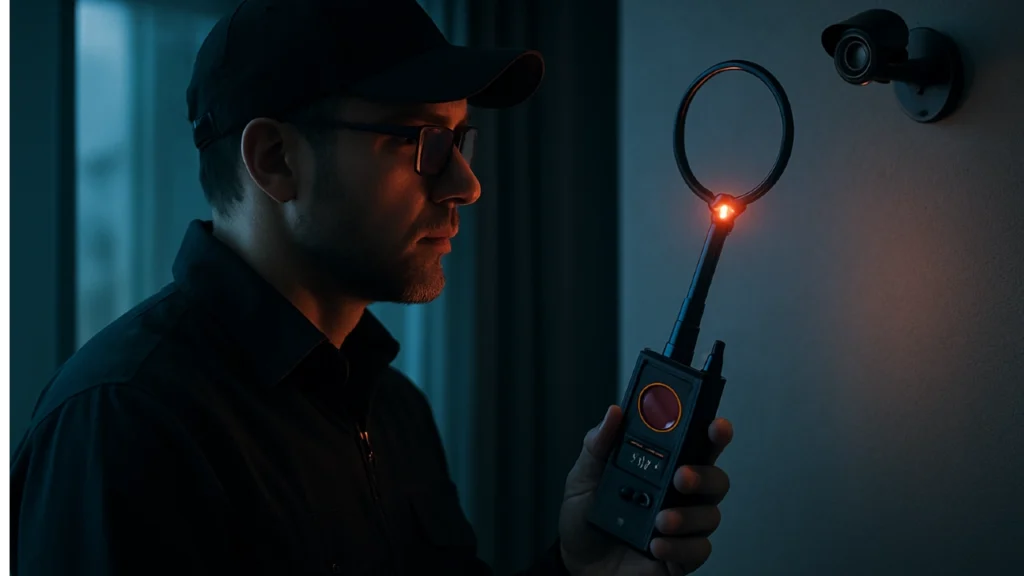
Corporate espionage prevention protects against intelligence gathering by competitors, foreign governments, or other threat actors. Security consultants conduct technical surveillance countermeasures (TSCM) detecting bugs and surveillance devices, implement counter-surveillance measures, provide security for sensitive meetings and travel, and investigate suspected espionage incidents.
Cyber security integration ensures information security addresses both physical and digital threats. Security consultants coordinate physical and cyber security controls, implement data loss prevention systems, provide endpoint security for devices, and ensure network security protects information assets.
Information security and corporate espionage prevention protect the confidential information that drives competitive success and business value.
Business Continuity and Emergency Response
Ensuring business operations continue despite security incidents, natural disasters, or other disruptions is essential for organizational resilience.
Business continuity planning prepares organizations to maintain operations during disruptions. Security consultants conduct business impact analysis identifying critical operations, develop continuity strategies for maintaining essential functions, implement backup systems and alternate facilities, create recovery procedures for restoring normal operations, and test plans through exercises and drills.
Business continuity planning ensures organizations can survive and recover from major disruptions.
Emergency response procedures guide organizational response to security incidents, natural disasters, medical emergencies, and other crisis situations. Security consultants develop emergency action plans for different scenarios, establish emergency communication systems, define roles and responsibilities, create evacuation and shelter procedures, and coordinate with emergency services.
Crisis management provides leadership and coordination during major incidents. Security consultants establish crisis management teams, develop decision-making frameworks, implement crisis communication strategies, and provide training for crisis leadership.
Incident response addresses specific security incidents including theft, workplace violence, cyber attacks, natural disasters, and other events. Security consultants develop incident response procedures, establish response teams, create escalation protocols, and coordinate with law enforcement and emergency services.
Recovery planning ensures rapid restoration of normal operations after incidents. Security consultants develop recovery strategies, identify recovery resources and vendors, establish recovery priorities, and test recovery capabilities.
Business continuity and emergency response planning ensure organizations can withstand disruptions and recover quickly, minimizing business impact.
Executive Protection and Travel Security
Senior leaders face elevated security risks requiring specialized protection measures.
Executive threat assessment evaluates risks to senior leaders based on position, visibility, business activities, and personal circumstances. Security consultants assess threats from criminals, activists, competitors, disgruntled employees or customers, and other threat actors.
Protective security details provide physical protection for executives facing elevated threats. Security consultants develop protection strategies, provide trained protection specialists, coordinate secure transportation, and implement residential security.
Travel security protects executives during business travel, particularly to high-risk locations. Security consultants provide pre-travel threat assessments, secure transportation arrangements, hotel security measures, itinerary security, and emergency response support.
Residential security protects executives’ homes and families. Security consultants conduct residential security assessments, implement physical security measures, provide security system design, and coordinate with local law enforcement.
Privacy protection shields executives from surveillance, stalking, and information gathering. Security consultants conduct counter-surveillance, implement communications security, provide social media and online privacy guidance, and detect surveillance threats.
Executive protection and travel security safeguard senior leaders who are critical to organizational success and face elevated security risks.
Security Program Development and Management
Effective security requires comprehensive programs with proper governance, policies, procedures, and ongoing management.
Security program design develops comprehensive security strategies addressing all security dimensions. Security consultants establish security governance structures, define security policies and standards, develop security procedures and controls, create security metrics and reporting, and integrate security into business operations.
Policy and procedure development creates formal documentation of security requirements and practices. Security consultants develop security policies establishing organizational requirements, standard operating procedures for security operations, emergency response procedures, incident response procedures, and compliance policies meeting regulatory requirements.
Security metrics and reporting measure security effectiveness and provide visibility to leadership. Security consultants develop key performance indicators (KPIs) for security, implement security dashboards and reporting, conduct security program reviews, and provide executive briefings on security posture.
Security governance establishes organizational structures and processes for security oversight. Security consultants develop security governance frameworks, establish security committees, define roles and responsibilities, and integrate security into enterprise risk management.
Vendor and contractor management ensures third parties meet security requirements. Security consultants develop vendor security standards, conduct vendor security assessments, monitor vendor compliance, and manage vendor security incidents.
Security program development and management provide comprehensive frameworks ensuring security receives appropriate organizational attention and resources.
Industry-Specific Business Security Consulting
Different industries face unique security challenges requiring specialized expertise and approaches.
Retail Security
Retail businesses face significant theft, fraud, and safety challenges requiring specialized security measures.
Security consultants provide loss prevention programs addressing shoplifting, employee theft, and organized retail crime, point-of-sale security preventing fraud and theft, cash handling security, inventory security and supply chain protection, parking lot and exterior security, and active shooter and workplace violence prevention.
Manufacturing and Industrial Security
Manufacturing facilities face threats to intellectual property, operations, and supply chains requiring comprehensive security.
Security consultants provide perimeter security for large facilities, access control for restricted areas, intellectual property and trade secret protection, supply chain security, insider threat programs, and operational technology (OT) security for industrial control systems.
Healthcare Security
Healthcare organizations face unique security challenges protecting patients, staff, and sensitive information in accessible environments.
Security consultants provide patient and visitor management, workplace violence prevention for emergency departments, infant and pediatric security, pharmaceutical security, HIPAA compliance and patient privacy, and active shooter response planning.
Financial Services Security
Financial institutions face sophisticated threats requiring robust security measures and regulatory compliance.
Security consultants provide branch security and robbery prevention, ATM security, fraud prevention and detection, executive protection, cyber security integration, and compliance with financial services regulations.
Legal and Professional Services Security
Law firms and professional services face confidentiality obligations and competitive intelligence threats.
Security consultants provide client confidentiality protection, document and information security, attorney-client privilege protection, corporate espionage prevention, and secure collaboration systems.
Technology and Research Security
Technology companies and research organizations face significant intellectual property theft risks.
Security consultants provide research and development security, intellectual property protection, corporate espionage prevention, insider threat programs, and supply chain security for technology products.
Metro Detective Agency Business Security Consulting
Metro Detective Agency provides comprehensive business security consulting services throughout California, combining security expertise with investigative capabilities.
Our Security Consulting Expertise
Our security consultants bring extensive experience and diverse capabilities to every engagement.
Comprehensive security knowledge spanning physical security, personnel security, information security, operational security, and executive protection ensures complete security coverage.
Investigative expertise enables thorough security investigations, insider threat detection, corporate espionage investigation, and incident response that purely security-focused consultants cannot provide.
Industry experience across diverse sectors including retail, manufacturing, healthcare, financial services, legal, technology, and professional services provides relevant expertise for your specific business.
Technical capabilities in security systems, cyber security, surveillance detection, and security technology ensures we can address sophisticated threats and implement advanced protective measures.
Regulatory knowledge of security and privacy requirements including HIPAA, PCI DSS, CMMC, and California privacy laws supports compliance objectives.
Our Consulting Approach
Metro Detective Agency delivers business security consulting through a systematic, client-focused approach.
Thorough assessment begins every engagement, ensuring we understand your business, threats, vulnerabilities, and security requirements before developing recommendations.
Risk-based prioritization focuses security investments on the most significant threats and vulnerabilities, providing maximum risk reduction within available resources.
Practical solutions balance security requirements with business operations, implementing effective controls that employees can work with successfully.
Phased implementation breaks comprehensive security improvements into manageable phases, enabling progress while managing costs and disruption.
Ongoing support provides continued guidance as your business evolves, threats change, or new security concerns emerge.
Why Choose Metro Detective Agency
Metro Detective Agency offers distinct advantages for business security consulting.
Combined security and investigative capabilities provide complete services from prevention through detection, response, and investigation that separate security and investigative firms cannot match.
Licensed and insured professionals operating under California Private Investigator License ensure legal compliance, professional standards, and accountability.
Proven track record protecting California businesses across diverse industries demonstrates our effectiveness and expertise.
Confidential and professional service protects your business information while protecting your business from security threats.
Transparent communication ensures you understand security risks, recommendations, and the value of security investments.
Local expertise throughout California provides knowledge of regional threats, law enforcement relationships, and regulatory requirements.
Contact Metro Detective Agency for Business Security Consulting
Concerned about security threats to your business? Contact Metro Detective Agency today for a confidential consultation about our business security consulting services. Our experienced security professionals will assess your organization’s vulnerabilities, identify threats specific to your industry and operations, and develop customized security solutions that protect your assets, employees, and reputation while supporting your business objectives.
Don’t wait for a security incident to take action—proactive security consulting prevents problems and provides peace of mind. Call us now to discuss your security concerns and learn how we can help protect your business.
Metro Detective Agency – Expert business security consulting services protecting California businesses through comprehensive security assessment, strategic planning, and practical implementation.