Effective Security Protection Measures: Comprehensive Guide to Personal and Business Safety
In an increasingly complex threat environment, effective security protection has become essential for individuals, families, and businesses. From physical threats and workplace violence to cyber attacks and corporate espionage, the range of security challenges facing people today requires comprehensive, multi-layered protection strategies. Whether you’re a business executive concerned about corporate security, a high-profile individual facing elevated risks, or simply someone who wants to protect your family and assets, understanding and implementing effective security measures is crucial. This comprehensive guide explores the full spectrum of security protection measures, from basic precautions anyone can implement to advanced professional security services for high-risk situations.
Understanding Modern Security Threats
Effective security protection begins with understanding the diverse threats you may face in today’s environment.
Physical Security Threats
Physical threats to personal safety and property security remain primary concerns requiring protective measures.
Violent crime including assault, robbery, home invasion, and kidnapping affects individuals across all demographics, though risk levels vary based on location, lifestyle, and circumstances. High-profile individuals, executives, and those displaying wealth face elevated risks of targeted crimes.
Workplace violence has become an increasing concern, with incidents ranging from disputes between employees to active shooter situations and targeted attacks against specific individuals or organizations. Workplace security measures must address both internal and external threats.
Stalking and harassment create ongoing safety concerns for victims, often escalating over time if not addressed. Stalkers may conduct surveillance, make threats, attempt unwanted contact, or progress to physical violence. Effective security measures help protect victims and provide evidence for legal intervention.
Terrorism and extremism pose threats in public spaces, at high-profile events, and to symbolic targets. While statistically rare for most individuals, awareness and preparedness for these threats are important components of comprehensive security.
Domestic violence represents a significant threat requiring specialized security approaches that protect victims while addressing the unique challenges of threats from intimate partners or family members.
Property and Asset Security Threats
Beyond personal safety, protecting property and valuable assets requires specific security measures.
Burglary and theft target homes, businesses, and vehicles, with criminals seeking cash, valuables, electronics, and other assets. Security measures deter opportunistic crimes and make successful theft more difficult.
Vandalism and property damage can result from random acts, targeted attacks, or protests and civil unrest. Protecting property from damage requires both preventive measures and rapid response capabilities.
Arson poses severe risks to property and life, requiring detection systems, fire suppression capabilities, and security measures that prevent unauthorized access to facilities.
Trespassing creates security concerns even when no theft or damage occurs, as unauthorized access to property may indicate surveillance, planning for future crimes, or other security threats.
Information Security Threats
In the digital age, information security has become as critical as physical security for both individuals and organizations.
Cyber attacks target computer systems, networks, and data through methods including malware, ransomware, denial of service attacks, and system intrusions. These attacks can steal sensitive information, disrupt operations, or hold data hostage for ransom payments.
Data breaches expose personal information, financial data, trade secrets, and other confidential information through security vulnerabilities, insider threats, or sophisticated attacks. The consequences include identity theft, financial losses, competitive disadvantages, and reputational damage.
Social engineering exploits human psychology rather than technical vulnerabilities, tricking individuals into revealing passwords, providing access, or taking actions that compromise security. Phishing, pretexting, and other social engineering tactics remain highly effective despite technical security measures.
Corporate espionage involves competitors, foreign governments, or criminal organizations stealing proprietary information, trade secrets, strategic plans, and competitive intelligence through both cyber and physical means including surveillance devices, insider recruitment, and network intrusions.
Intellectual property theft targets patents, designs, formulas, software code, and other valuable intellectual assets that provide competitive advantages or have significant market value.
Reputational and Privacy Threats
Modern security concerns extend beyond physical safety and financial losses to include reputation and privacy.
Defamation and false information spread through social media and online platforms can damage personal and business reputations, affecting relationships, career opportunities, and business success.
Privacy violations through unauthorized surveillance, data collection, or information exposure create both immediate concerns and long-term vulnerabilities that can be exploited for various malicious purposes.
Doxxing involves publishing private personal information online with malicious intent, exposing individuals to harassment, threats, and potential physical danger.
Deepfakes and manipulated media create false audio or video content that appears authentic, potentially damaging reputations or creating false evidence of statements or actions.
Understanding these diverse threats helps you implement appropriate security measures tailored to your specific risk profile and circumstances.
Foundational Security Principles
Effective security protection is built on fundamental principles that apply across all security domains.
Defense in Depth
The defense-in-depth principle involves implementing multiple layers of security rather than relying on single protective measures.
Layered security ensures that if one security measure fails or is bypassed, additional layers provide continued protection. For physical security, this might include perimeter fencing, access controls, surveillance systems, and security personnel. For information security, layers include firewalls, encryption, access controls, and monitoring systems.
Redundancy in security systems prevents single points of failure. Backup power for security systems, redundant communication methods, and alternative security measures ensure continued protection even when primary systems fail.
Comprehensive coverage addresses all potential vulnerabilities rather than focusing narrowly on obvious threats. Attackers often exploit overlooked weaknesses, so thorough security assessments and comprehensive protective measures are essential.
Risk-Based Approach
Effective security allocates resources based on actual risk levels rather than applying uniform measures regardless of threat.
Threat assessment evaluates what threats you actually face based on your circumstances, activities, profile, and environment. High-profile executives face different threats than average individuals, requiring different security measures.
Vulnerability analysis identifies weaknesses in your current security posture that could be exploited by potential threats. Understanding vulnerabilities allows you to prioritize improvements that address actual weaknesses.
Impact evaluation considers the consequences if security is compromised, helping prioritize protection for the most critical assets, information, and individuals.
Resource allocation directs security investments toward areas of highest risk and potential impact, ensuring efficient use of security budgets and avoiding both over-protection of low-risk areas and under-protection of high-risk concerns.
Proactive Prevention
The most effective security is proactive, preventing incidents rather than merely responding after they occur.
Deterrence makes potential attackers choose easier targets by displaying visible security measures, creating uncertainty about security capabilities, and increasing the perceived risk of attempting attacks.
Early detection identifies threats before they materialize into actual incidents, allowing intervention that prevents harm. Surveillance systems, monitoring services, and threat intelligence provide early warning of developing threats.
Intervention addresses identified threats before they escalate, whether through law enforcement involvement, security measures that eliminate vulnerabilities, or actions that remove threat motivations.
Continuous improvement involves regularly assessing security effectiveness, learning from incidents and near-misses, updating measures to address evolving threats, and maintaining vigilance rather than becoming complacent.
Balanced Security
Effective security balances protection with practical considerations including cost, convenience, and quality of life.
Proportional response ensures security measures are appropriate for actual risk levels, avoiding both inadequate protection and excessive measures that create unnecessary burdens.
Operational integration implements security in ways that support rather than hinder normal activities and operations. Security that creates excessive inconvenience is often circumvented or abandoned.
Cost-effectiveness achieves necessary protection within reasonable budgets, prioritizing high-value security measures and avoiding expensive solutions that provide minimal additional protection.
Flexibility allows security measures to scale up or down based on changing circumstances, threat levels, and activities.
These foundational principles guide the implementation of specific security measures across all domains.
Physical Security Measures
Physical security protects people, property, and assets from physical threats through various protective measures.
Perimeter Security
The first layer of physical security involves controlling and monitoring the perimeter of protected spaces.
Fencing and barriers establish clear boundaries, deter casual intrusion, and delay determined attackers. Security fencing should be appropriate for the threat level—residential properties may use decorative fencing that provides boundary definition and basic deterrence, while high-security facilities require reinforced fencing with anti-climb features.
Gates and access controls regulate entry to properties through locked gates, electronic access systems, intercom systems for visitor verification, and security personnel at entry points for high-security locations.
Perimeter lighting eliminates hiding places, enables surveillance, and deters criminals who prefer darkness. Motion-activated lighting provides security benefits while conserving energy.
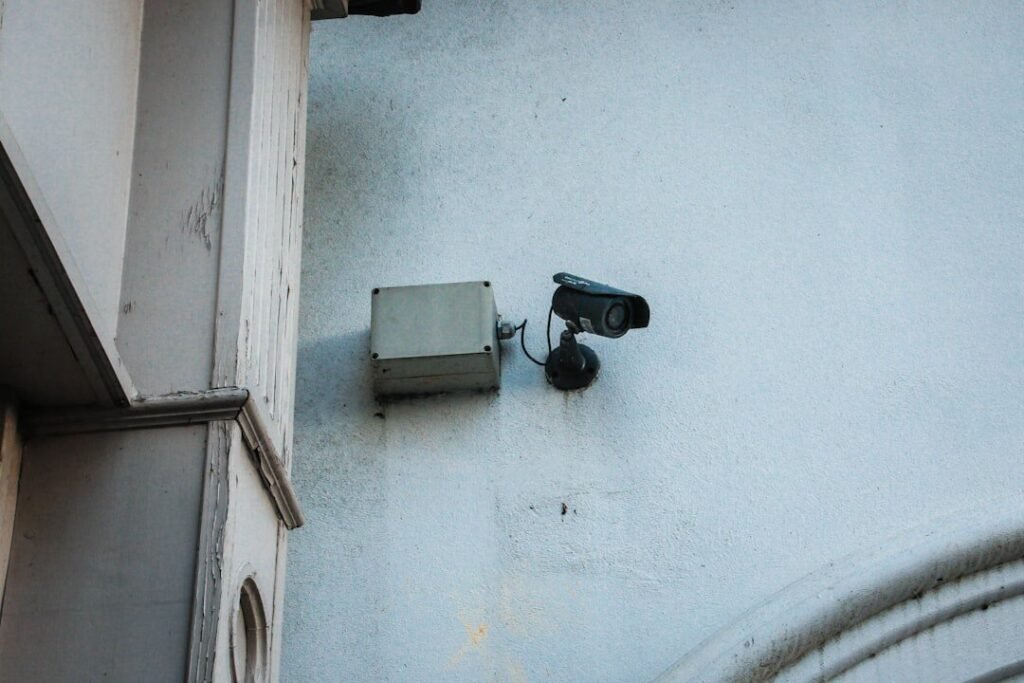
Perimeter surveillance using cameras positioned to monitor all entry points, fence lines, and approaches provides early detection of intrusion attempts and records evidence of security incidents.
Natural surveillance through landscape design that eliminates hiding places, maintains clear sight lines, and positions windows to allow observation of approaches enhances security without obvious security measures.
Signage indicating security systems, surveillance, and private property status provides deterrence by informing potential intruders of security measures they’ll face.
Access Control Systems
Controlling who can access protected spaces is fundamental to physical security.
Lock systems range from traditional key locks to high-security locks resistant to picking and forced entry, smart locks with electronic access controls and logging capabilities, and biometric locks using fingerprints or other biological identifiers.
Key management is critical—change locks when keys are lost or after personnel changes, limit key distribution to only those who need access, and maintain records of who has keys to which areas.
Electronic access control systems use key cards, fobs, or codes to control entry, providing advantages including ability to grant or revoke access remotely, detailed logs of who accessed what areas and when, temporary access for visitors or contractors, and scheduled access that limits entry to specific times.
Visitor management systems control and track visitor access through sign-in procedures, visitor badges, escort requirements for sensitive areas, and background checks for contractors or others with extended access.
Multi-factor authentication for high-security areas requires multiple credentials (card plus PIN, biometric plus card) to gain access, significantly increasing security.
Mantrap entries use double-door systems where the first door must close before the second opens, preventing tailgating and ensuring only authorized individuals gain access.
Surveillance Systems
Video surveillance provides monitoring, deterrence, and evidence collection capabilities.
Camera placement should cover all entry points, high-value areas, parking areas and vehicle approaches, perimeters and vulnerable points, and interior spaces where security incidents might occur.
Camera types include fixed cameras for monitoring specific locations, pan-tilt-zoom (PTZ) cameras for active monitoring of large areas, covert cameras for discreet surveillance, and infrared or low-light cameras for nighttime monitoring.
Recording and storage systems should retain footage for adequate periods (typically 30-90 days), use sufficient resolution to identify individuals and details, and provide reliable storage with backup capabilities.
Remote monitoring allows viewing surveillance feeds from smartphones or computers, enabling real-time awareness of security situations from any location.
Analytics and alerts in advanced systems can detect motion, recognize faces, identify unusual patterns, and send alerts when security events occur.
Integration with other security systems including access controls, alarms, and lighting creates comprehensive security that responds automatically to detected threats.
Intrusion Detection Systems
Alarm systems detect and alert to unauthorized entry or security breaches.
Sensor types include door and window sensors that detect opening, motion sensors that detect movement in protected spaces, glass break sensors that detect window breaking, and pressure sensors for floors or mats.
Alarm monitoring can be self-monitored with alerts sent to your devices, professionally monitored by security companies that respond to alarms, or a combination of both approaches.
Response protocols define what happens when alarms trigger, including automatic notification to monitoring services, alerts to property owners or security personnel, and automatic law enforcement dispatch for verified alarms.
False alarm prevention through proper system design, user training, and verification procedures prevents the alarm fatigue and reduced response that result from frequent false alarms.
System maintenance including regular testing, battery replacement, and sensor inspection ensures reliable operation when needed.
Security Lighting
Proper lighting is a fundamental yet often overlooked security measure.
Exterior lighting should illuminate all entry points, eliminate dark areas where intruders could hide, light parking areas and vehicle approaches, and provide adequate visibility for surveillance cameras.
Motion-activated lighting provides security benefits while conserving energy, surprising potential intruders with sudden illumination when they approach.
Interior lighting on timers or smart controls can create the appearance of occupancy when properties are vacant, deterring burglars who target empty homes or businesses.
Emergency lighting ensures visibility during power outages, supporting evacuation and security response during emergencies.
Light pollution considerations balance security needs with community standards and neighbor relations, using directed lighting that illuminates your property without creating excessive light spillover.
Physical Barriers and Hardening
Strengthening physical structures makes unauthorized entry more difficult and time-consuming.
Reinforced doors with solid cores, reinforced frames, high-quality locks, and deadbolts provide significantly better security than hollow-core doors with simple locks.
Window security includes impact-resistant glass or security film that prevents easy breaking, window locks beyond simple latches, security bars or grilles for high-risk windows, and thorny plants beneath windows to deter access.
Safe rooms or panic rooms provide secure refuge during home invasions or other threats, with reinforced construction, secure communications, and supplies for extended stays if necessary.
Bollards and barriers protect buildings from vehicle attacks, preventing cars or trucks from being used as weapons against structures or crowds.
Reinforced walls in high-security areas use construction materials and techniques that resist forced entry, ballistic threats, or explosions depending on specific threat profiles.
Security Personnel
Human security personnel provide capabilities that technology alone cannot match.
Security guards offer visible deterrence, active monitoring and response, ability to make judgment calls in complex situations, and customer service functions in addition to security.
Executive protection specialists provide personal security for high-risk individuals through threat assessment, advance work for travel and events, close protection during activities, and emergency response capabilities.
Concierge security combines security functions with customer service in residential and commercial settings, providing access control, visitor management, and assistance while maintaining security.
Mobile patrols conduct regular checks of properties or facilities, providing security presence without the cost of continuous on-site personnel.
Event security manages crowds, controls access, and responds to incidents at events ranging from small private functions to large public gatherings.
The appropriate level and type of security personnel depends on your specific security needs, risk profile, and budget.
Personal Security Measures
Beyond facility security, personal security measures protect individuals from threats in various environments.
Situational Awareness
Awareness of your surroundings and potential threats is the foundation of personal security.
Environmental scanning involves regularly observing your surroundings, noting people and vehicles near you, identifying potential threats or suspicious behavior, and recognizing escape routes and safe locations.
Baseline establishment means understanding what’s normal for environments you frequent, making it easier to recognize anomalies that might indicate threats.
Threat indicators include people showing unusual interest in you, vehicles that appear repeatedly in different locations, individuals who seem to be following or watching you, and situations that feel wrong even if you can’t identify specific threats.
Distraction avoidance means limiting phone use while walking or in public spaces, avoiding headphones that prevent hearing approaching threats, and maintaining awareness rather than becoming absorbed in activities.
Intuition should be trusted—if something feels wrong, take action to increase safety even if you can’t articulate specific reasons for concern.
Travel Security
Travel, particularly to unfamiliar locations, requires specific security considerations.
Pre-travel planning includes researching destination security conditions, identifying safe areas and areas to avoid, planning routes and transportation in advance, and sharing itineraries with trusted contacts.
Accommodation security involves choosing hotels with good security, requesting rooms on middle floors (not ground level or top floor), using all available locks and security devices, and inspecting rooms for security concerns upon arrival.
Transportation security includes using reputable transportation services, avoiding unmarked taxis or rideshares, being aware during travel, and keeping valuables secured and out of sight.
Document security means keeping copies of important documents separate from originals, using hotel safes for passports and valuables when not needed, and having backup access to critical information if documents are lost or stolen.
Communication security involves informing trusted contacts of your whereabouts, establishing check-in protocols, and having emergency contact information readily available.
Cultural awareness helps you avoid behaviors that might attract unwanted attention or create security risks in different cultural contexts.
International travel considerations include registering with your embassy, understanding local laws and customs, having appropriate insurance, and knowing how to access emergency services in foreign countries.
Digital Security for Personal Safety
Digital security measures protect not just information but also physical safety in an interconnected world.
Location privacy involves disabling location services when not needed, avoiding real-time location sharing on social media, and being cautious about apps that track and share your location.
Social media security includes limiting personal information shared publicly, using privacy settings to control who sees your posts, avoiding posts that reveal when you’re away from home, and being selective about accepting friend requests or followers.
Communication security uses encrypted messaging for sensitive conversations, verifies identities before sharing information, and avoids discussing security measures or vulnerabilities in digital communications.
Device security implements strong passwords or biometric locks, enables remote wipe capabilities for lost or stolen devices, keeps software updated, and uses VPNs when accessing networks in public spaces.
Online harassment response involves documenting harassment for potential legal action, blocking and reporting harassers, adjusting privacy settings, and seeking professional help for serious threats.
Personal Protection Equipment
Certain situations may warrant personal protection equipment beyond standard security measures.
Pepper spray or personal alarms provide non-lethal self-defense options, though training in proper use is essential and legal restrictions vary by jurisdiction.
Ballistic protection including body armor may be appropriate for individuals facing specific threats, though this represents an extreme measure for high-risk situations.
Secure communications devices provide encrypted voice and data communications for individuals requiring maximum communication security.
Personal locator beacons enable emergency signaling in remote areas or situations where standard communications might not be available.
The appropriateness of personal protection equipment depends on specific threat assessments and should be considered carefully with professional guidance.
Protective Intelligence
Understanding threats before they materialize enables proactive protection.
Threat monitoring tracks potential threats through social media monitoring, awareness of concerning communications or behaviors, and intelligence about threats to your industry, organization, or demographic.
Background screening of employees, contractors, or others with access to your spaces or information helps identify potential insider threats.
Advance work for travel or events includes security assessments of locations, identification of potential threats, coordination with local security or law enforcement, and preparation of emergency response plans.
Incident analysis learns from security incidents or near-misses to improve future protection.
Professional protective intelligence services provide capabilities beyond what individuals can accomplish independently, particularly for high-risk situations.
Business and Organizational Security
Organizations face unique security challenges requiring comprehensive programs that protect people, assets, information, and operations.
Security Program Development
Effective organizational security begins with structured program development.
Security assessment evaluates current security posture, identifies vulnerabilities, assesses threats specific to your organization and industry, and establishes baseline security metrics.
Policy development creates clear security policies covering physical security, information security, personnel security, incident response, and compliance requirements.
Roles and responsibilities define who is responsible for various security functions, from executive oversight to day-to-day security operations.
Budget allocation ensures adequate resources for security programs while demonstrating cost-effectiveness and return on investment.
Implementation planning establishes timelines, priorities, and milestones for security program deployment.
Training programs ensure all personnel understand security policies, recognize threats, and know their responsibilities for maintaining security.
Workplace Security
Creating secure work environments protects employees while supporting productive operations.
Access control limits building and area access to authorized personnel, tracks who is in facilities at any time, and manages visitor access appropriately.
Employee screening includes background checks appropriate for positions and access levels, verification of credentials and references, and ongoing monitoring for positions with high security responsibilities.
Workplace violence prevention programs identify warning signs of potential violence, provide reporting mechanisms for concerning behaviors, offer intervention and support services, and train employees and managers in threat recognition and response.
Emergency response planning prepares for various scenarios including active shooters, natural disasters, medical emergencies, and security incidents, with regular drills and training.
Security awareness training educates employees about security threats, social engineering tactics, proper handling of sensitive information, and reporting procedures for security concerns.
Executive Protection
Senior executives and high-profile personnel may require specialized protection measures.
Threat assessment evaluates risks specific to executives based on their roles, public profiles, and circumstances.
Residential security protects executives’ homes through enhanced physical security, surveillance systems, and potentially security personnel.
Travel security includes advance security assessments, secure transportation, protective personnel, and emergency response capabilities.
Event security manages security for public appearances, speaking engagements, and other events where executives may be exposed to threats.
Family protection extends security measures to executives’ family members who may face threats due to the executive’s position.
Privacy protection limits publicly available information about executives and their families that could be exploited by threats.
Supply Chain Security
Organizations must secure their supply chains against various threats.
Vendor security assessment evaluates security practices of suppliers and partners who have access to your facilities, systems, or information.
Transportation security protects goods in transit through secure logistics, tracking systems, and verification procedures.
Counterfeit prevention implements measures to detect and prevent counterfeit products entering supply chains.
Insider threat mitigation addresses risks from employees or contractors with supply chain access who might steal, sabotage, or facilitate external attacks.
Business Continuity and Resilience
Security programs must ensure organizations can continue operations despite security incidents or disruptions.
Business continuity planning identifies critical functions, establishes recovery priorities, develops alternative operating procedures, and ensures resources for continued operations during disruptions.
Disaster recovery plans specifically address recovery from major incidents including cyber attacks, natural disasters, or catastrophic security breaches.
Redundancy and backup systems ensure critical data, systems, and capabilities can be restored quickly after incidents.
Testing and exercises validate plans through tabletop exercises, simulations, and full-scale drills that identify weaknesses and improve response capabilities.
Cybersecurity Measures
Digital security has become inseparable from overall security protection in modern environments.
Network Security
Protecting computer networks from intrusion and attack is fundamental to cybersecurity.
Firewalls control traffic between networks, blocking unauthorized access while allowing legitimate communications.
Intrusion detection and prevention systems monitor networks for suspicious activity, alerting administrators to potential attacks and automatically blocking some threats.
Network segmentation divides networks into separate zones, limiting the spread of attacks if one segment is compromised.
Virtual Private Networks (VPNs) encrypt communications over public networks, protecting data from interception.
Wireless security implements strong encryption, authentication, and access controls for WiFi networks.
Network monitoring provides continuous visibility into network activity, detecting anomalies that might indicate security incidents.
Endpoint Security
Protecting individual devices—computers, phones, tablets—prevents them from becoming entry points for attacks.
Antivirus and anti-malware software detects and removes malicious software before it can cause harm.
Endpoint detection and response (EDR) provides advanced threat detection and response capabilities beyond traditional antivirus.
Device encryption protects data on lost or stolen devices from unauthorized access.
Patch management ensures all devices receive security updates promptly, closing vulnerabilities before they can be exploited.
Mobile device management controls and secures smartphones and tablets used for business purposes.
Application whitelisting allows only approved applications to run, preventing unauthorized or malicious software.
Access Management
Controlling who can access systems and data is critical to information security.
Identity and access management (IAM) systems centrally manage user identities, authentication, and access permissions.
Multi-factor authentication requires multiple credentials to access systems, significantly reducing unauthorized access even when passwords are compromised.
Privileged access management provides special controls for administrative accounts with elevated permissions.
Least privilege principle grants users only the minimum access necessary for their roles, limiting damage from compromised accounts.
Access reviews regularly verify that access permissions remain appropriate as roles and circumstances change.
Data Protection
Protecting sensitive information requires specific security measures beyond general system security.
Data classification categorizes information based on sensitivity, enabling appropriate protection for different data types.
Encryption protects data both at rest (stored) and in transit (being transmitted), rendering it unreadable without proper decryption keys.
Data loss prevention (DLP) systems monitor and control data movement, preventing unauthorized transmission of sensitive information.
Backup and recovery ensures critical data can be restored after incidents, with backups stored securely and tested regularly.
Secure disposal properly destroys data when no longer needed, preventing recovery from discarded devices or media.
Security Monitoring and Incident Response
Detecting and responding to security incidents quickly minimizes their impact.
Security Information and Event Management (SIEM) systems aggregate and analyze security data from multiple sources, identifying potential incidents.
Security Operations Center (SOC) provides continuous monitoring and response capabilities, either in-house or through managed security services.
Incident response plans define procedures for detecting, containing, investigating, and recovering from security incidents.
Forensic capabilities enable investigation of incidents to understand what happened, how attackers gained access, and what data or systems were affected.
Threat intelligence provides information about current threats, attack methods, and indicators of compromise to improve detection and prevention.
Integrated Security Solutions
The most effective security combines multiple measures into integrated systems that provide comprehensive protection.
Physical and Logical Integration
Modern security systems integrate physical and digital security for enhanced protection.
Unified access control uses the same credentials for both physical access (building entry) and logical access (computer systems), simplifying management while enhancing security.
Video analytics combine surveillance systems with artificial intelligence to automatically detect security events, recognize individuals, and alert to suspicious activities.
Automated response links detection systems to response mechanisms—alarms trigger lockdowns, cyber attacks initiate network isolation, and suspicious activities prompt security personnel alerts.
Centralized management provides single interfaces for monitoring and controlling diverse security systems, improving situational awareness and response coordination.
Risk Management Integration
Security programs should integrate with broader organizational risk management.
Enterprise risk assessment considers security risks alongside other business risks, ensuring appropriate prioritization and resource allocation.
Compliance integration aligns security measures with regulatory requirements, industry standards, and contractual obligations.
Insurance coordination works with insurance providers to ensure adequate coverage while potentially reducing premiums through demonstrated security measures.
Business impact analysis evaluates how security incidents would affect operations, finances, and reputation, informing security priorities.
Security Culture Development
Technology and procedures alone cannot ensure security—organizational culture must support security objectives.
Leadership commitment demonstrates that security is a priority through resource allocation, policy enforcement, and personal example.
Employee engagement involves all personnel in security through awareness training, reporting mechanisms, and recognition of security-conscious behaviors.
Continuous improvement treats security as an ongoing process rather than a one-time implementation, regularly assessing and enhancing security measures.
Balanced approach implements security in ways that support rather than hinder operations, gaining cooperation rather than resistance.
Metro Detective Agency Security Services
Metro Detective Agency provides comprehensive security protection services tailored to individual and organizational needs.
Security Assessments and Consulting
Our experienced security professionals conduct thorough assessments and provide expert guidance for security program development.
Vulnerability assessments identify weaknesses in physical security, information security, and operational security through systematic evaluation of your environments, systems, and procedures.
Threat analysis evaluates specific threats you face based on your circumstances, industry, profile, and activities.
Security planning develops comprehensive security programs addressing identified vulnerabilities and threats with practical, cost-effective measures.
Policy development creates security policies, procedures, and guidelines appropriate for your organization and circumstances.
Compliance consulting helps ensure security measures meet regulatory requirements and industry standards.
Physical Security Services
We provide professional physical security services including installation, monitoring, and personnel.
Security system design and installation implements access controls, surveillance systems, intrusion detection, and integrated security solutions tailored to your needs.
Security personnel including guards, executive protection specialists, and event security provide human security capabilities.
Security audits evaluate existing security measures, identifying weaknesses and recommending improvements.
Emergency response planning develops and tests plans for various security incidents and emergencies.
Investigations and Intelligence
Our investigative services support security programs through intelligence gathering and incident investigation.
Background investigations screen employees, contractors, vendors, or others requiring access to your facilities or information.
Threat investigations identify and assess specific threats to individuals or organizations.
Incident investigation determines what happened during security breaches, who was responsible, and how to prevent recurrence.
Protective intelligence monitors for emerging threats and provides early warning of potential security incidents.
Counter-Surveillance Services
We protect against covert surveillance through professional technical surveillance countermeasures.
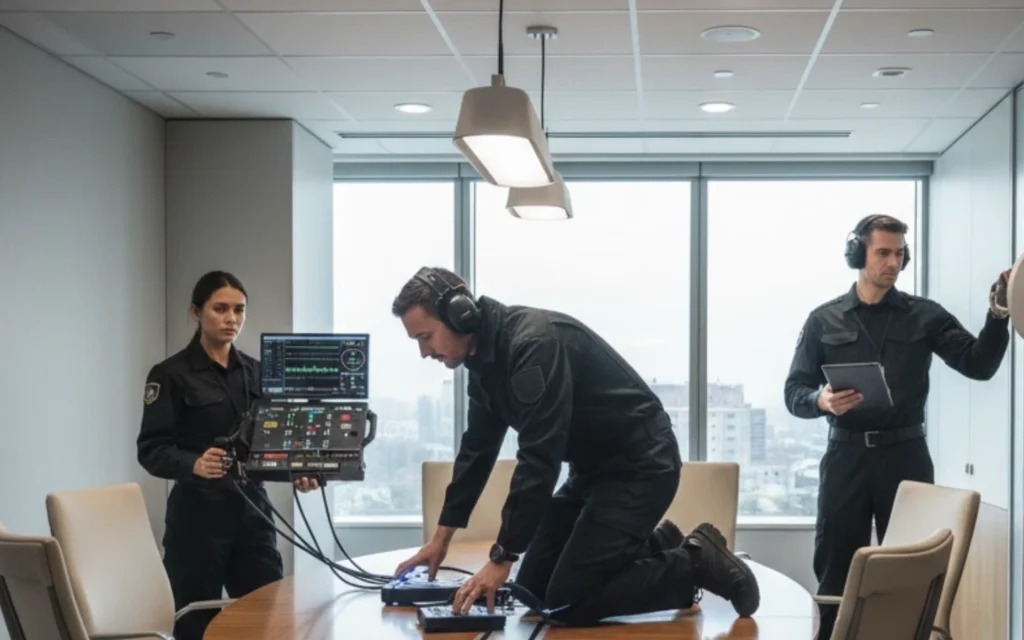
Bug sweeps detect hidden cameras, listening devices, and other surveillance equipment in homes, offices, and vehicles.
Regular security sweeps provide ongoing protection through scheduled examinations of sensitive spaces.
Pre-event sweeps ensure important meetings, negotiations, or events occur in surveillance-free environments.
Customized Security Solutions
We understand that security needs vary widely and provide tailored solutions for specific circumstances.
Residential security protects homes and families through appropriate security measures for your risk level and lifestyle.
Executive protection provides comprehensive security for high-profile individuals and their families.
Business security implements organizational security programs protecting people, assets, and information.
Event security manages security for events ranging from small private functions to large public gatherings.
Travel security provides protection during domestic and international travel.
Professional Excellence and Discretion
Metro Detective Agency brings professionalism, expertise, and discretion to all security engagements.
Licensed and experienced security professionals with extensive backgrounds in law enforcement, military, and private security.
Comprehensive capabilities addressing all aspects of security from physical protection to cyber security and investigations.
Customized approach tailoring security measures to your specific needs rather than one-size-fits-all solutions.
Confidential service maintaining strict privacy about security measures, vulnerabilities, and incidents.
Ongoing support providing continued assistance beyond initial implementation to ensure sustained security effectiveness.
Frequently Asked Questions
How much should I spend on security?
Security spending should be proportional to your risk level and the value of what you’re protecting. Basic residential security (quality locks, alarm system, surveillance) typically costs $2,000-$5,000 initially plus monitoring fees. Business security varies widely based on size and industry. A general guideline is allocating 3-8% of overall budget to security, with higher percentages for high-risk industries or situations. Professional security assessments help determine appropriate spending for your circumstances.
What security measures provide the best return on investment?
The highest-value security measures are typically layered basic protections rather than expensive single solutions. For most situations, quality locks and access controls, alarm systems with professional monitoring, surveillance cameras at key locations, adequate lighting, and security awareness training provide excellent protection relative to cost. Advanced measures like security personnel or sophisticated systems are appropriate when threat levels justify the investment.
How do I know if I need professional security services?
Consider professional security if you’re a high-profile individual or executive, if you handle highly sensitive or valuable information, if you’ve experienced security incidents or credible threats, if you’re in a high-risk industry or location, or if you have specific concerns that basic security measures don’t adequately address. Professional security assessments can evaluate whether your situation warrants professional services.
Can security measures interfere with normal activities?
Well-designed security should support rather than hinder normal activities. While some security measures create minor inconveniences (entering codes, using access cards), properly implemented security integrates smoothly with daily routines. Security that creates excessive burden is often circumvented or abandoned, reducing effectiveness. Professional security design balances protection with operational needs.
How often should security measures be updated?
Security should be reviewed at least annually, with updates when circumstances change significantly, after security incidents, when new threats emerge, or when technology advances make improvements practical. Physical security systems typically last 5-10 years before requiring significant updates, while cybersecurity requires more frequent updates due to rapidly evolving threats.
What’s the difference between security and privacy?
Security protects against threats and unauthorized access, while privacy controls what information is collected and shared about you. The two concepts overlap—good security supports privacy by preventing unauthorized information access, and privacy measures often enhance security. Comprehensive protection addresses both security and privacy concerns.
Should I publicize my security measures?
Visible security measures (cameras, alarm signs, lighting) provide deterrence value and should be apparent. However, specific details about security systems, procedures, vulnerabilities, or response capabilities should be kept confidential. Publicizing too much information about security helps potential adversaries plan ways to circumvent your protections.
Concerned about security for yourself, your family, or your business? Contact Metro Detective Agency today for a confidential security consultation. Our experienced security professionals will assess your specific situation, identify vulnerabilities, and recommend practical, effective security measures tailored to your needs and budget. Don’t wait for a security incident to take action—proactive security protection provides peace of mind and prevents problems before they occur. Call us now to discuss your security concerns and learn how we can help protect what matters most to you.