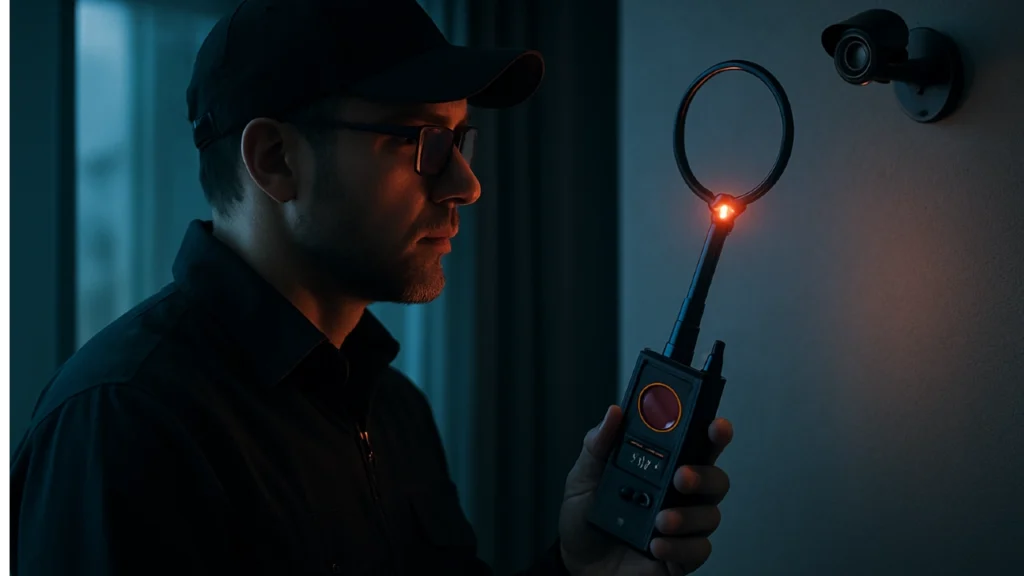
Protect Your Privacy: Bug Sweeping Devices and Technical Surveillance Countermeasures
In an era where surveillance technology has become increasingly sophisticated, miniaturized, and accessible, protecting your privacy from electronic eavesdropping requires more than vigilance—it demands professional technical surveillance countermeasures (TSCM) using specialized detection equipment. Hidden cameras, audio bugs, GPS trackers, and other covert surveillance devices can be purchased online for minimal cost and deployed by anyone from suspicious spouses and business competitors to corporate spies and criminals. These devices can compromise your most private conversations, sensitive business discussions, personal activities, and confidential information without leaving obvious traces. Whether you’re concerned about surveillance in your home, office, vehicle, or other private spaces, professional bug sweeping using advanced detection devices provides the only reliable method to identify hidden surveillance equipment and protect your privacy. Metro Detective Agency employs state-of-the-art bug sweeping devices and proven TSCM methodologies to detect surveillance threats and give you confidence that your private spaces remain private.
Understanding Electronic Surveillance Threats
Before exploring bug sweeping devices and detection methods, it’s essential to understand the surveillance threats you face and how modern surveillance technology works.
Types of Electronic Surveillance Devices
Electronic surveillance encompasses various devices designed to covertly monitor your activities, conversations, and communications.
Audio surveillance devices (bugs) are miniature microphones with transmitters or recording capabilities that capture conversations and sounds. Modern audio bugs can be incredibly small—some no larger than a coin—and can be hidden in everyday objects including smoke detectors, electrical outlets, picture frames, lamps, clocks, pens, USB chargers, and countless other items. Audio bugs may transmit conversations in real-time via radio frequency (RF), cellular networks, or WiFi, or they may record audio to internal memory for later retrieval.
Video surveillance devices (hidden cameras) capture visual images and video of your activities without your knowledge. Hidden cameras have become remarkably small and can be concealed in items like alarm clocks, smoke detectors, air fresheners, picture frames, books, electrical outlets, USB chargers, clothing hooks, and even eyeglasses. Like audio bugs, hidden cameras may transmit video wirelessly or record to internal storage. Some sophisticated devices combine audio and video surveillance in a single concealed package.
GPS tracking devices monitor your location and movements by attaching to your vehicle or personal belongings. Modern GPS trackers are small, battery-powered devices that can be magnetically attached to vehicles or hidden in bags, briefcases, or other items you carry. They transmit location data via cellular networks, allowing someone to track your movements in real-time or review your travel history.
Phone and computer monitoring devices include physical devices that intercept communications or software (spyware) installed on devices that monitors calls, messages, emails, internet activity, and stored information. Physical phone taps may be installed on phone lines, while spyware can be remotely installed on smartphones and computers through various methods.
WiFi and network surveillance intercepts data transmitted over wireless networks, potentially capturing emails, passwords, financial information, and other sensitive data. Sophisticated attackers can set up rogue WiFi access points that appear legitimate but actually intercept all data transmitted through them.
Laser and acoustic surveillance uses advanced technology to detect sound vibrations on windows or other surfaces, allowing eavesdroppers to monitor conversations inside buildings from outside locations without any device inside the target space.
Combination devices integrate multiple surveillance capabilities—for example, a device that looks like a USB phone charger but contains a hidden camera, microphone, and WiFi transmitter, allowing remote monitoring of both audio and video.
How Surveillance Devices Work
Understanding surveillance device operation helps explain how detection devices identify them.
Radio frequency (RF) transmission is used by many surveillance devices to transmit audio, video, or data wirelessly. These devices contain small radio transmitters that broadcast signals that can be received by nearby receivers. RF bugs operate on various frequencies including FM radio bands, cellular frequencies, WiFi frequencies, and other portions of the radio spectrum. The advantage of RF transmission for surveillance is real-time monitoring from remote locations; the disadvantage is that transmission can be detected by RF detectors.
Cellular transmission uses mobile phone networks to transmit surveillance data, allowing monitoring from anywhere with cellular coverage. Cellular surveillance devices contain SIM cards and operate like miniature cell phones. They can be more difficult to detect than simple RF bugs because they transmit on cellular frequencies that are normally present in most environments.
WiFi transmission connects surveillance devices to internet networks, allowing remote access to audio and video feeds through internet connections. WiFi surveillance devices appear as network devices and can be accessed from anywhere with internet access. They blend in with legitimate WiFi devices, making detection more challenging.
Recording devices store audio or video to internal memory rather than transmitting it, requiring physical retrieval to access recorded information. Recording devices are harder to detect than transmitting devices because they don’t emit radio signals during recording. However, they must be physically accessed to retrieve recordings, creating opportunities for detection during placement or retrieval.
Power sources for surveillance devices include batteries, connection to electrical power, or parasitic power drawn from phone lines or other sources. Battery-powered devices are easier to hide but have limited operating time before batteries must be replaced. Devices connected to electrical power can operate indefinitely but require access to power sources. Understanding power requirements helps predict where devices might be hidden and how often they might need servicing.
Activation methods determine when surveillance devices operate. Some devices record or transmit continuously, while others are voice-activated (turning on when they detect sound), motion-activated (activating when they detect movement), or remotely activated (turned on and off by the person conducting surveillance). Activation methods affect battery life and detection difficulty.
Who Uses Surveillance Devices and Why
Understanding who might deploy surveillance devices against you helps assess your risk and take appropriate protective measures.
Suspicious spouses or partners represent one of the most common sources of covert surveillance, using hidden cameras and audio bugs to monitor suspected infidelity, gather evidence for divorce proceedings, or maintain control in unhealthy relationships. Domestic surveillance often targets homes, vehicles, and personal belongings.
Business competitors may deploy surveillance to steal trade secrets, learn about business strategies, identify key clients or suppliers, gather competitive intelligence, or gain advantages in negotiations. Corporate surveillance typically targets offices, conference rooms, and vehicles used by executives.
Estranged ex-partners and stalkers use surveillance to monitor victims’ activities, learn their routines and whereabouts, and maintain unwanted contact or control. This surveillance often violates stalking and harassment laws and creates serious safety concerns.
Employers sometimes conduct workplace surveillance that may cross legal and ethical boundaries, monitoring employees in areas where they have privacy expectations or using surveillance methods that violate privacy laws.
Private investigators working for various clients may deploy surveillance devices, though licensed investigators should follow legal and ethical guidelines that prohibit many forms of electronic surveillance without proper authorization.
Identity thieves and criminals use surveillance to gather personal information, learn security practices, identify valuables, plan burglaries or robberies, or gather information for fraud schemes.
Landlords and property managers occasionally conduct illegal surveillance of tenants through hidden cameras or audio devices in rental properties.
Corporate spies and foreign intelligence target businesses and individuals with access to valuable intellectual property, trade secrets, or sensitive information.
Blackmailers and extortionists use surveillance to gather compromising information they can use for extortion.
Legal Framework for Electronic Surveillance
Understanding the legal boundaries around electronic surveillance helps you recognize when surveillance against you is illegal and what legal protections you have.
Wiretapping and eavesdropping laws strictly regulate interception of communications. Federal law and most state laws prohibit recording conversations without consent of at least one party (and in some states, all parties). Installing audio bugs to record conversations you’re not part of is generally illegal regardless of location.
Video surveillance laws vary by location and context. Generally, video surveillance is legal in public places where there’s no expectation of privacy, but illegal in private spaces like homes, bathrooms, changing rooms, and bedrooms where privacy is expected. Some states require consent for video recording even in semi-public spaces.
Consent requirements differ by state. “One-party consent” states allow recording conversations if one party (which can be the person doing the recording) consents. “Two-party consent” or “all-party consent” states require all parties to a conversation to consent to recording. These laws apply to both audio and video recording of conversations.
Expectation of privacy is a key legal concept. You have strong privacy expectations in your home, private conversations, and personal spaces. You have limited privacy expectations in public places, workplaces (in some contexts), and other semi-public spaces. Surveillance that violates reasonable privacy expectations is generally illegal.
GPS tracking laws vary by jurisdiction but generally prohibit tracking vehicles you don’t own without consent or legal authority. Some states have specific laws criminalizing unauthorized GPS tracking.
Computer and phone monitoring laws prohibit unauthorized access to computers and installation of monitoring software without authorization. The Computer Fraud and Abuse Act and similar state laws make unauthorized computer access a crime.
Stalking and harassment laws prohibit surveillance that constitutes stalking or harassment, even if individual surveillance acts might otherwise be legal.
Landlord-tenant laws in most jurisdictions prohibit landlords from conducting video or audio surveillance in rental units or other areas where tenants have privacy expectations.
Employment laws limit employer surveillance in some contexts, particularly in areas where employees have privacy expectations like restrooms and locker rooms.
Understanding these legal protections helps you recognize illegal surveillance and pursue legal remedies including criminal prosecution, protective orders, and civil litigation for invasion of privacy.
Bug Sweeping Devices and Detection Technology
Professional bug sweeping uses specialized detection devices that identify surveillance equipment through various technical means.
Radio Frequency (RF) Detectors
RF detectors are fundamental bug sweeping tools that identify radio frequency transmissions from wireless surveillance devices.
How RF detectors work: RF detectors scan the radio frequency spectrum for signals that might indicate transmitting surveillance devices. When they detect RF signals, they alert the operator through visual displays, audio tones, or vibration. Advanced RF detectors can identify signal strength, frequency, modulation type, and other characteristics that help determine whether signals come from surveillance devices or legitimate sources.
Types of RF detectors:
Broadband RF detectors scan wide frequency ranges simultaneously, providing quick detection of transmitting devices across the spectrum. They’re useful for initial sweeps but may generate false positives from legitimate RF sources like cell phones, WiFi routers, and other wireless devices.
Spectrum analyzers provide detailed analysis of RF signals, displaying signal strength across frequencies and allowing operators to identify specific signals, determine their characteristics, and distinguish surveillance devices from legitimate sources. Professional-grade spectrum analyzers are essential for thorough TSCM sweeps.
Non-linear junction detectors (NLJD) detect electronic components regardless of whether they’re transmitting. NLJDs send out radio signals and detect reflections from semiconductor junctions in electronic devices. This allows detection of surveillance devices even when they’re turned off or in standby mode, making NLJDs particularly valuable for finding recording devices and dormant transmitters.
What RF detectors can find: RF detectors identify wireless audio bugs, hidden cameras with wireless transmission, GPS trackers that transmit location data, cellular surveillance devices, WiFi surveillance devices, and other transmitting surveillance equipment.
Limitations of RF detectors: They cannot detect recording devices that don’t transmit, wired surveillance devices, or devices that are turned off during sweeps. They may generate false positives from legitimate RF sources. Sophisticated surveillance devices may use frequency hopping, burst transmission, or other techniques to evade detection.
Camera Detection Devices
Specialized devices detect hidden cameras through various methods.
Lens detectors identify camera lenses by detecting light reflections from lens surfaces. These devices shine light (often infrared or laser) and detect reflections that indicate the presence of camera lenses. Lens detectors are effective for finding both wireless and wired cameras, as well as cameras that aren’t currently operating.
Infrared (IR) detection identifies cameras by detecting infrared light emitted by night-vision cameras or infrared illuminators used with some hidden cameras. Many hidden cameras use infrared LEDs for low-light recording, and these emit infrared light that’s invisible to the human eye but detectable with IR viewers.
Thermal imaging detects heat signatures from electronic devices including hidden cameras. Operating cameras generate heat that can be detected with thermal imaging devices, helping identify cameras hidden in walls, ceilings, or objects.
Physical inspection tools including borescopes (flexible cameras on cables) allow inspection of areas that can’t be visually examined directly, such as inside walls, ceiling spaces, or behind objects.
GPS Tracker Detectors
GPS tracker detection requires specialized approaches because GPS receivers don’t transmit signals that can be detected—they only receive GPS satellite signals.
RF detection of GPS tracker transmission: While GPS receivers themselves don’t transmit, GPS tracking devices transmit location data via cellular or RF transmission. RF detectors can identify these transmissions, allowing detection of active GPS trackers.
Physical inspection: Many GPS trackers are found through systematic physical inspection of vehicles, checking common hiding places including under vehicles (magnetically attached), inside wheel wells, behind bumpers, in engine compartments, under seats, in trunk areas, and in other concealed locations.
GPS detector devices specifically designed to detect GPS trackers can identify both the GPS receiver component and any transmission from the device.
Phone and Line Analysis Equipment
Specialized equipment detects surveillance on telephone lines and telecommunications systems.
Telephone line analyzers detect wiretaps, line taps, and other surveillance on landline phones by measuring electrical characteristics of phone lines, identifying anomalies that indicate surveillance devices, and detecting voltage drops or impedance changes caused by taps.
Time domain reflectometry (TDR) sends signals down phone lines and analyzes reflections to identify taps, splices, or other anomalies that might indicate surveillance.
Tone generators and tracers help identify unauthorized connections to phone lines by tracing line paths and identifying unexpected branches or connections.
Computer and Network Security Tools
Detecting computer and network surveillance requires different tools than physical surveillance detection.
Anti-spyware and anti-malware software scans computers and mobile devices for monitoring software, keyloggers, and other surveillance programs.
Network security scanners identify unauthorized devices on networks, detect suspicious network traffic, and identify potential network-based surveillance.
Forensic analysis tools examine computers and devices for evidence of monitoring software, unauthorized access, or data exfiltration.
Physical Search Tools and Techniques
Beyond electronic detection devices, physical search remains essential for comprehensive bug sweeping.
Visual inspection systematically examines all areas for surveillance devices, looking for items that seem out of place, new items that weren’t there before, objects positioned to view or hear target areas, and signs of tampering with walls, ceilings, or objects.
Flashlights and mirrors help inspect areas that can’t be directly seen, including behind furniture, inside vents, and under objects.
Screwdrivers and tools allow disassembly of objects to inspect for hidden devices inside smoke detectors, electrical outlets, lamps, and other items.
Magnifying glasses and jeweler’s loupes help identify tiny surveillance devices or signs of tampering.
Borescopes and inspection cameras allow visual inspection inside walls, ceilings, and other spaces that can’t be accessed directly.
Professional Bug Sweeping Process
Professional TSCM sweeps follow systematic methodologies that combine multiple detection methods to identify surveillance devices comprehensively.
Pre-Sweep Preparation and Planning
Effective bug sweeping begins with preparation and planning.
Client consultation gathers information about surveillance concerns including what prompted the sweep request, specific areas of concern, who might have had access to spaces being swept, and what types of surveillance are suspected.
Threat assessment evaluates who might conduct surveillance, what their capabilities and resources might be, what information or activities they might target, and what types of surveillance devices they’re likely to use.
Scope definition determines what locations will be swept, what types of surveillance will be searched for, and what level of sweep is appropriate based on threat assessment and client concerns.
Access coordination ensures appropriate access to all areas that need to be swept, coordinates timing to minimize disruption, and ensures privacy during the sweep.
Equipment preparation ensures all detection devices are functioning properly, calibrated correctly, and appropriate for the specific sweep requirements.
Physical Search Phase
Physical search systematically examines all areas for surveillance devices.
Visual inspection carefully examines all areas including walls, ceilings, floors, furniture, fixtures, decorations, electrical outlets, smoke detectors, air vents, and any objects in the space. Inspectors look for items that seem out of place, new items, objects positioned to view or hear target areas, signs of tampering, and anything suspicious.
Disassembly inspection involves carefully disassembling items that could conceal surveillance devices including smoke detectors, electrical outlets and switch plates, lamps and light fixtures, telephones, clocks and alarm clocks, picture frames, books, and other objects. Items are photographed before disassembly and carefully reassembled after inspection.
Structural inspection examines walls, ceilings, and floors for signs of drilling, cutting, or other modifications that might indicate device installation. Inspectors look for fresh paint or spackling, misaligned tiles or panels, loose molding or trim, and other indicators of recent work.
Furniture and fixture inspection examines all furniture, checking under cushions, inside drawers, behind and under furniture, and inside hollow furniture components.
Access point inspection carefully examines all entry points including doors, windows, vents, and utility access points where surveillance devices might be introduced.
Electronic Detection Phase
Electronic detection uses specialized equipment to identify transmitting and electronic surveillance devices.
RF spectrum analysis scans the radio frequency spectrum using spectrum analyzers to identify all RF signals present, analyze signal characteristics to distinguish surveillance from legitimate sources, and identify suspicious signals for further investigation. This process typically involves multiple scans at different times to identify devices that transmit intermittently.
Broadband RF detection uses handheld RF detectors to sweep all areas, paying particular attention to areas where RF signals are detected, and investigating signal sources to determine whether they’re surveillance devices or legitimate sources.
Non-linear junction detection uses NLJD devices to scan for electronic components in areas where devices might be hidden, detecting electronics even when devices aren’t transmitting or are powered off. NLJD is particularly valuable for finding recording devices and dormant transmitters.
Camera lens detection uses lens detectors to scan for hidden cameras by detecting reflections from camera lenses, checking all areas where cameras might be positioned to view target areas.
Infrared detection uses IR viewers to scan for infrared emissions from night-vision cameras or IR illuminators.
Thermal imaging uses thermal cameras to detect heat signatures from operating electronic devices, helping identify devices hidden in walls, ceilings, or objects.
GPS tracker detection involves RF detection of tracker transmissions and physical inspection of vehicles checking all common GPS tracker hiding locations.
Telecommunications Analysis
Telephone and network analysis identifies surveillance on communication systems.
Telephone line analysis uses line analyzers to test all phone lines for wiretaps, taps, or other surveillance devices, measuring electrical characteristics and identifying anomalies.
Network security scanning examines computer networks for unauthorized devices, suspicious traffic, and potential network-based surveillance.
Device examination inspects phones, computers, and other devices for monitoring software, unauthorized modifications, and signs of compromise.
Documentation and Reporting
Professional bug sweeps include comprehensive documentation of findings.
Photographic documentation records all areas swept, any devices found, and relevant conditions or observations.
Technical documentation records all RF signals detected, their characteristics and sources, results of all detection methods used, and technical details of any surveillance devices found.
Chain of custody maintains proper handling and documentation of any surveillance devices found to preserve them as evidence if needed for legal proceedings.
Written report provides comprehensive documentation including description of areas swept, detection methods used, findings and observations, any surveillance devices discovered, assessment of surveillance sophistication and likely source, and recommendations for protective measures.
Post-Sweep Recommendations
Professional bug sweeps include recommendations for ongoing protection.
Security improvements address vulnerabilities that allowed surveillance device installation or that remain after the sweep.
Access control enhancements limit who can access swept areas to prevent future device installation.
Ongoing monitoring may include periodic re-sweeps, continuous RF monitoring, or other measures to detect future surveillance attempts.
Operational security practices help prevent information compromise even if surveillance occurs.
Legal action recommendations advise on pursuing criminal prosecution, protective orders, or civil litigation if illegal surveillance is discovered.
Limitations of Bug Sweeping and Countermeasures
While professional bug sweeping is highly effective, it’s important to understand its limitations and the countermeasures sophisticated adversaries might use.
Detection Limitations
No detection method is 100% effective against all possible surveillance devices.
Dormant devices that aren’t transmitting or operating during sweeps may not be detected by RF or thermal detection methods. Some sophisticated surveillance devices remain dormant until activated remotely or on schedule.
Burst transmission devices transmit very briefly at unpredictable times, making detection more difficult. A device might transmit for only seconds per day, potentially during times when sweeps aren’t being conducted.
Frequency-hopping devices rapidly change transmission frequencies, making detection and analysis more challenging.
Ultra-wideband and spread spectrum devices use sophisticated transmission methods that blend with background RF noise, making detection difficult without specialized equipment.
Optical surveillance using laser microphones or other methods that don’t require devices inside target spaces cannot be detected by sweeps of interior spaces.
Recording devices that don’t transmit and are well-hidden may not be found during physical searches, particularly if they’re hidden inside walls or in other difficult-to-access locations.
Miniaturization has made surveillance devices incredibly small, making physical detection more challenging even with systematic searches.
Custom or military-grade devices may use technologies and methods that exceed the detection capabilities of commercial TSCM equipment.
Adversary Countermeasures
Sophisticated adversaries may use various countermeasures to evade detection.
Device removal before sweeps if adversaries know sweeps are scheduled, they may temporarily remove devices and reinstall them after sweeps are completed.
Multiple devices may be deployed with some obvious devices intended to be found while more sophisticated devices remain hidden.
Combination of methods using both electronic surveillance and other intelligence gathering makes detection of all surveillance more difficult.
Remote surveillance from outside target spaces using directional microphones, laser microphones, or other methods doesn’t require devices inside swept areas.
Insider cooperation with someone who has legitimate access to swept areas allows device installation after sweeps or provides information about sweep schedules.
Addressing Limitations
Professional TSCM addresses limitations through multiple strategies.
Multiple detection methods combine RF detection, physical search, thermal imaging, and other methods to maximize detection effectiveness.
Repeated sweeps at different times and on irregular schedules increase likelihood of detecting devices that transmit intermittently or that might be removed before scheduled sweeps.
Surprise sweeps conducted without advance notice prevent adversaries from removing devices before detection.
Continuous monitoring using installed RF monitoring systems provides ongoing detection between periodic sweeps.
Comprehensive security combines bug sweeping with physical security, access control, and operational security to prevent device installation and limit information compromise even if surveillance occurs.
Assumption of surveillance in high-risk situations, operating as if surveillance might be present even after sweeps, using secure locations for sensitive discussions and implementing operational security practices.
Protecting Privacy Beyond Bug Sweeping
While bug sweeping is essential for detecting existing surveillance, comprehensive privacy protection requires additional measures.
Preventing Surveillance Device Installation
The best defense against electronic surveillance is preventing device installation.
Access control limits who can enter private spaces, requires visitor logs and escort requirements, and implements key control and lock security to prevent unauthorized access.
Physical security includes security systems with intrusion detection, surveillance cameras monitoring entry points (creating deterrence and documentation), and secure locks and barriers.
Awareness and vigilance trains occupants to notice new items, objects out of place, signs of tampering, and suspicious individuals or activities.
Regular inspections even without specific concerns help identify surveillance devices before they compromise significant information.
Secure facility design minimizes hiding places for surveillance devices, positions sensitive discussion areas away from exterior walls, and uses materials that make surveillance more difficult.
Operational Security Practices
Operational security limits information compromise even if surveillance occurs.
Sensitive discussion protocols use secure locations for important conversations, vary discussion locations, and avoid discussing sensitive matters in potentially compromised spaces.
Information compartmentalization limits who knows sensitive information and avoids discussing sensitive matters unnecessarily.
Communication security uses encrypted communications for sensitive matters and avoids discussing confidential information on unsecured phone lines or in emails.
Document security protects sensitive documents through secure storage, controlled access, and secure destruction when no longer needed.
Electronic device security protects computers and phones through security software, strong passwords and authentication, encryption of sensitive data, and physical security for devices.
Legal Protections
Legal measures provide additional privacy protection.
Protective orders can prohibit specific individuals from surveillance, contact, or approaching you if you can demonstrate harassment or stalking.
Criminal prosecution for illegal surveillance can result in penalties that deter future surveillance and provide justice for privacy violations.
Civil litigation may provide remedies for invasion of privacy, including damages for harm caused by illegal surveillance.
Cease and desist letters formally notify suspected surveillance perpetrators that their conduct is illegal and unwelcome, creating documentation for legal action if surveillance continues.
Metro Detective Agency Bug Sweeping Services
Metro Detective Agency provides comprehensive bug sweeping and technical surveillance countermeasures using state-of-the-art detection equipment and proven methodologies.
Our TSCM Expertise and Equipment
Our team brings extensive experience and advanced equipment to bug sweeping services.
Certified TSCM technicians trained in technical surveillance countermeasures use proven methodologies and stay current with evolving surveillance technologies and detection methods.
Former law enforcement and intelligence professionals with backgrounds in surveillance operations understand how surveillance devices are deployed and how to detect them effectively.
State-of-the-art detection equipment including professional-grade spectrum analyzers, non-linear junction detectors, RF detectors and scanners, camera lens detectors, thermal imaging cameras, telephone line analyzers, and GPS tracker detectors provides comprehensive detection capabilities.
Ongoing training and equipment updates ensure we remain current with new surveillance technologies and detection methods.
Proven methodologies combine multiple detection methods in systematic processes that maximize detection effectiveness.
Comprehensive Bug Sweeping Services
We provide thorough bug sweeping services for diverse environments and concerns.
Residential bug sweeps protect your home privacy by sweeping all rooms, checking for audio bugs, hidden cameras, GPS trackers on vehicles, phone taps, and computer monitoring. We understand the sensitive nature of home surveillance concerns and provide discreet, thorough service.
Office and business bug sweeps protect confidential business information by sweeping offices, conference rooms, executive areas, and other business spaces for surveillance devices that could compromise trade secrets, business strategies, or confidential information.
Vehicle bug sweeps detect GPS trackers and other surveillance devices in cars, trucks, and other vehicles through RF detection and systematic physical inspection of all common hiding locations.
Hotel and temporary location sweeps provide security for business travelers and others concerned about surveillance in temporary accommodations.
Pre-meeting sweeps ensure sensitive meetings, negotiations, or discussions occur in secure environments free from surveillance.
Post-incident sweeps investigate suspected surveillance by conducting comprehensive sweeps to identify devices and gather evidence for legal action.
Our Bug Sweeping Process
We follow systematic processes that ensure comprehensive detection.
Confidential consultation discusses your concerns, circumstances, and specific areas of concern in complete confidence.
Threat assessment evaluates who might conduct surveillance, what types of devices they might use, and what areas are most likely to be targeted.
Comprehensive physical search systematically examines all areas, disassembles items that could conceal devices, and inspects structures for signs of device installation.
Electronic detection uses multiple detection methods including RF spectrum analysis, non-linear junction detection, camera lens detection, thermal imaging, and telecommunications analysis.
Documentation provides photographic and technical documentation of all findings.
Detailed reporting delivers comprehensive written reports documenting areas swept, methods used, findings, and recommendations.
Security recommendations advise on preventing future surveillance and protecting privacy going forward.
Ongoing Privacy Protection
We provide ongoing services that maintain privacy protection over time.
Periodic re-sweeps detect new surveillance devices and provide ongoing assurance that spaces remain secure.
Continuous RF monitoring using installed monitoring systems provides real-time detection of transmitting surveillance devices between periodic sweeps.
Security consulting helps implement physical security, access control, and operational security measures that prevent surveillance device installation.
Incident response provides rapid response when new surveillance concerns arise.
Legal support coordinates with your legal counsel and provides expert testimony if surveillance-related legal proceedings occur.
Confidential and Professional Service
We understand the sensitive nature of surveillance concerns and provide discreet, professional service.
Complete confidentiality protects your privacy from first contact through service completion and beyond.
Discreet operations conduct bug sweeps without alerting others to surveillance concerns or detection activities.
Professional reporting provides clear documentation suitable for personal use or legal proceedings.
Secure communications ensure discussions of surveillance concerns and sweep findings remain confidential.
Ongoing availability remains accessible to address new concerns or provide additional services as needed.
Frequently Asked Questions
How much does professional bug sweeping cost?
Bug sweeping costs vary based on the size of areas being swept and the comprehensiveness of services needed. Basic sweeps of single rooms typically cost $500-$1,500, while comprehensive sweeps of homes or offices generally range from $1,500-$5,000 or more depending on size and complexity. We provide clear cost estimates based on your specific needs.
How long does a bug sweep take?
Sweep duration depends on the size of areas being swept and the thoroughness of the sweep. A single room might take 1-2 hours, while comprehensive sweeps of entire homes or offices typically take 3-8 hours or more. We provide time estimates based on your specific situation.
Can I buy bug sweeping equipment and do it myself?
Consumer-grade detection equipment is available, but professional TSCM requires specialized training, experience, and professional-grade equipment that costs thousands of dollars. DIY detection often misses sophisticated devices or generates false positives. Professional bug sweeping provides much more reliable results.
How often should I have bug sweeps conducted?
Frequency depends on your risk level and circumstances. High-risk individuals or situations may warrant monthly or quarterly sweeps. Most people need sweeps only when specific concerns arise or during particularly sensitive periods. We can recommend appropriate sweep frequency based on your situation.
What happens if you find surveillance devices?
If we find surveillance devices, we document them thoroughly, preserve them as evidence if you want to pursue legal action, provide detailed information about the devices and their capabilities, and recommend security improvements to prevent future surveillance. We can also coordinate with law enforcement if you want to report illegal surveillance.
Will bug sweeping damage my property?
Professional bug sweeping should not damage property. We carefully disassemble and reassemble items during physical searches, and our detection methods are non-destructive. In rare cases where we need to investigate behind walls or in other difficult-to-access areas, we discuss this with you before proceeding and minimize any necessary intrusion.
Can bug sweeping detect all surveillance devices?
No detection method is 100% effective against all possible devices, but professional TSCM using multiple detection methods and systematic processes provides the highest probability of detecting surveillance devices. We’re transparent about detection limitations and provide recommendations for addressing them.
Is bug sweeping legal?
Yes, bug sweeping is completely legal. You have every right to search for surveillance devices in spaces you own or control. In fact, many forms of electronic surveillance are illegal, and detecting illegal surveillance is an important step in protecting your legal rights and privacy.
Concerned about electronic surveillance in your home, office, vehicle, or other private spaces? Contact Metro Detective Agency today for a confidential consultation about our professional bug sweeping and technical surveillance countermeasures services. Our certified TSCM technicians use state-of-the-art detection equipment and proven methodologies to identify hidden cameras, audio bugs, GPS trackers, and other surveillance devices that threaten your privacy. Don’t leave your privacy to chance—get the peace of mind that comes from professional bug sweeping. Call us now to schedule your confidential sweep and take control of your privacy.