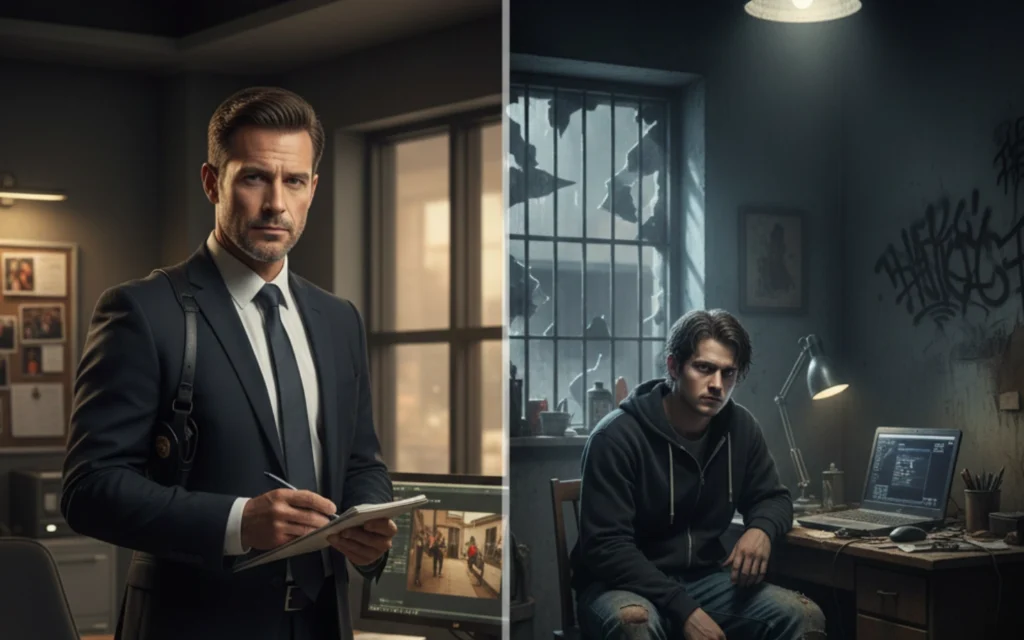
Shadow Investigations Michigan: Professional Surveillance and Investigative Services
When you need to know the truth about someone’s activities, whereabouts, or behavior, professional shadow investigations provide the answers you’re seeking. Whether you’re dealing with suspected infidelity, insurance fraud, employee misconduct, custody concerns, or any situation requiring discreet observation and documentation of someone’s activities, shadow investigations conducted by licensed Michigan private investigators deliver the evidence and clarity you need. Metro Detective Agency provides comprehensive shadow investigation services throughout Michigan, combining advanced surveillance techniques, experienced investigators, and state-of-the-art equipment to uncover the truth while maintaining complete discretion and legal compliance.
Understanding Shadow Investigations
Shadow investigations, also known as surveillance investigations, involve the discreet observation and documentation of a subject’s activities, movements, and interactions over a period of time.
What Are Shadow Investigations?
Shadow investigations are professional investigative services where licensed private investigators follow and observe subjects to document their activities, verify claims, establish patterns of behavior, and gather evidence for various personal, legal, or business purposes. The term “shadowing” refers to the investigator’s ability to follow subjects closely while remaining undetected, much like a shadow that follows without being noticed.
These investigations use a combination of mobile surveillance (following subjects in vehicles), stationary surveillance (observing from fixed positions), foot surveillance (following on foot in public spaces), and various documentation methods including photography, video recording, and detailed written logs of all observed activities.
Shadow investigations are among the most common services provided by private investigators, with applications ranging from domestic matters like infidelity and custody investigations to business concerns including employee misconduct, workers’ compensation fraud, and competitive intelligence.
Why Shadow Investigations Are Needed
People and organizations engage shadow investigation services for numerous important reasons.
Verification of claims or statements is often necessary when someone’s account of their activities, whereabouts, or circumstances doesn’t align with other evidence or seems questionable. Shadow investigations provide objective documentation of what subjects actually do versus what they claim.
Evidence gathering for legal proceedings including divorce, custody disputes, civil litigation, and criminal defense often requires surveillance evidence to support claims, refute opposing party assertions, or establish facts relevant to legal issues.
Protection of interests whether personal, financial, or business interests motivates many shadow investigations. Discovering the truth about someone’s activities allows you to make informed decisions and take appropriate action to protect yourself or your organization.
Due diligence in various contexts including pre-marital investigations, business partnerships, or employment decisions may include surveillance to verify that individuals are who they claim to be and behave consistently with their representations.
Peace of mind comes from knowing the truth rather than living with suspicion, uncertainty, or anxiety about someone’s activities or trustworthiness.
Common Shadow Investigation Scenarios
Shadow investigations are conducted in diverse situations across personal and professional contexts.
Infidelity investigations are perhaps the most common shadow investigation scenario, where surveillance documents whether a spouse or partner is engaging in an extramarital affair, meeting with someone inappropriately, or lying about their whereabouts and activities.
Child custody investigations use surveillance to document parenting behaviors, verify that children are being properly cared for, identify concerning activities or associations, and gather evidence relevant to custody determinations.
Insurance fraud investigations document whether individuals claiming disabilities or injuries are actually impaired or are engaging in activities inconsistent with their claimed limitations.
Workers’ compensation fraud investigations verify whether employees claiming work-related injuries are actually disabled or are working elsewhere, engaging in strenuous activities, or otherwise misrepresenting their conditions.
Employee misconduct investigations may include surveillance to document theft, unauthorized activities during work hours, violation of non-compete agreements, or other policy violations.
Background verification sometimes includes surveillance to confirm employment, residence, lifestyle, or other claimed circumstances.
Missing persons investigations may use surveillance of known associates or locations the missing person might visit to locate individuals who have disappeared.
Process service often requires surveillance to locate subjects who are avoiding service of legal documents.
Asset investigations may include surveillance to identify hidden assets, undisclosed income sources, or lifestyle inconsistent with claimed financial circumstances.
Legal Framework for Shadow Investigations in Michigan
Shadow investigations in Michigan must comply with state and federal laws governing surveillance, privacy, and evidence gathering.
Private investigator licensing is required in Michigan for anyone conducting investigations for compensation. Michigan’s licensing requirements ensure investigators have appropriate training, pass background checks, and maintain professional standards. Always verify that any investigator you hire holds a current Michigan private investigator license.
Surveillance in public places is legal in Michigan when subjects are in locations where they have no reasonable expectation of privacy. Investigators can observe and photograph subjects in public streets, parks, businesses, restaurants, and other public spaces without violating privacy laws.
Observation from public vantage points allows investigators to observe and document activities that are visible from public locations, even if those activities occur on private property. For example, photographing someone in their yard from a public street is generally legal if the activity is visible to the public.
Vehicle tracking laws in Michigan allow GPS tracking of vehicles you own or co-own, but tracking vehicles you don’t have ownership interest in may violate privacy laws. Professional investigators understand these nuances and ensure compliance.
Recording conversations in Michigan requires only one-party consent, meaning you can record conversations you’re part of without the other party’s knowledge. However, recording conversations you’re not part of (eavesdropping) is illegal without court authorization.
Trespassing prohibitions mean investigators cannot enter private property without permission to conduct surveillance, and any evidence gathered through trespassing is inadmissible and may result in criminal charges.
Harassment and stalking laws distinguish between legal surveillance and illegal stalking. Professional investigators conduct surveillance in ways that document activities without creating fear or constituting harassment.
Admissibility standards for evidence in Michigan courts require that surveillance evidence be gathered legally, properly documented, and relevant to legal issues. Evidence from licensed investigators who follow proper procedures is generally admissible, while evidence gathered through illegal means or by unlicensed individuals may be excluded.
Understanding and complying with these legal requirements is essential for effective shadow investigations that produce usable evidence without creating legal problems for clients.
Shadow Investigation Techniques and Methods
Professional shadow investigations employ sophisticated techniques developed through decades of investigative experience.
Mobile Surveillance
Following subjects in vehicles is a core shadow investigation technique requiring specialized skills and equipment.
Multi-vehicle surveillance uses two or more investigator vehicles to follow subjects while minimizing detection risk. Investigators can alternate which vehicle is directly behind the subject, maintain surveillance if the subject makes unexpected turns, and provide continuous observation even in complex traffic situations.
Surveillance driving techniques include maintaining appropriate following distances that allow observation without being obvious, using traffic patterns to maintain cover, anticipating subject movements based on turn signals and lane positions, and adapting to different driving conditions and environments.
Vehicle selection for surveillance uses inconspicuous vehicles that blend into typical traffic, with investigators often using different vehicles on different days to avoid recognition.
GPS tracking (when legal and appropriate) supplements physical surveillance, allowing investigators to maintain awareness of subject locations even when direct visual surveillance isn’t possible.
Documentation while mobile uses dashboard cameras, handheld cameras, and detailed notes to record subject movements, destinations, and activities observed during mobile surveillance.
Urban and rural adaptations adjust techniques for different environments—urban surveillance uses traffic cover and multiple vehicles, while rural surveillance requires greater following distances and more sophisticated techniques to avoid detection.
Stationary Surveillance
Observing from fixed positions provides detailed documentation of activities at specific locations.
Position selection identifies optimal vantage points that provide clear views of target locations while maintaining investigator concealment, considering factors like sight lines, lighting, background, and legal access to observation positions.
Extended observation from stationary positions documents who comes and goes from locations, how long they stay, what activities occur, and patterns of behavior over time.
Photographic documentation from stationary positions captures clear images of subjects, associates, vehicles, and activities using professional cameras with telephoto lenses that allow detailed documentation from distance.
Video surveillance records extended activities, providing comprehensive documentation that photographs alone cannot match, particularly valuable for documenting sequences of events and timing.
Covert positioning uses vehicles, public locations, or other positions that don’t attract attention while providing necessary observation capabilities.
Shift coverage for extended surveillance operations may involve multiple investigators working in shifts to maintain continuous observation over many hours or days.
Foot Surveillance
Following subjects on foot in public spaces requires different techniques than vehicle surveillance.
Blending in with crowds and environments prevents subjects from noticing investigators, using appropriate clothing and behavior for the location and situation.
Maintaining visual contact while avoiding detection requires careful positioning, use of reflections and indirect observation, and techniques for following through crowds, buildings, and complex environments.
Team surveillance uses multiple investigators who can alternate who’s closest to the subject, maintain observation from different angles, and ensure continuous surveillance even if the subject enters locations where one investigator cannot follow.
Documentation challenges on foot require discrete photography and video recording using concealed or inconspicuous equipment while maintaining surveillance.
Public transportation surveillance follows subjects on buses, trains, or other transit while maintaining cover and documenting travel patterns and destinations.
Technical Surveillance
Advanced technology enhances shadow investigation capabilities.
Professional cameras and lenses capture clear images from distance, in low light, and in challenging conditions, providing evidence quality that consumer cameras cannot match.
Video equipment including high-definition cameras, stabilization systems, and extended recording capabilities document activities comprehensively.
Night vision and low-light equipment enables surveillance during evening hours when many activities of investigative interest occur.
Audio recording equipment (used legally and appropriately) documents conversations and interactions when permitted by law.
Communication systems allow surveillance teams to coordinate effectively, share real-time information about subject movements, and adapt to changing situations.
Database and research tools provide background information, identify associates and locations, and support investigation planning.
Documentation and Evidence Management
Proper documentation ensures surveillance evidence is credible, admissible, and useful.
Photographic standards include time-stamping all images, documenting locations where photographs were taken, capturing images that clearly show subjects and relevant activities, and maintaining image quality suitable for court presentation.
Video documentation records extended activities with continuous time-stamps, clear audio when relevant and legal, and stable footage that clearly shows subjects and activities.
Written activity logs provide detailed minute-by-minute accounts of surveillance operations including times, locations, descriptions of observed activities, identities of individuals observed, and vehicle information.
Evidence organization compiles all documentation in formats that are easy to review, clearly labeled and indexed, and suitable for presentation to attorneys or courts.
Chain of custody maintains proper handling and storage of evidence to ensure admissibility and prevent challenges based on tampering or alteration.
Report preparation synthesizes all surveillance documentation into comprehensive reports that present findings clearly, include relevant evidence, and provide professional analysis of observations.
Types of Shadow Investigations
Shadow investigations serve diverse purposes across personal, legal, and business contexts.
Domestic Shadow Investigations
Personal relationship matters frequently require surveillance to establish truth and gather evidence.
Infidelity investigations document whether spouses or partners are engaging in affairs, meeting with other individuals romantically, lying about whereabouts and activities, or engaging in behaviors that violate relationship commitments. Surveillance provides definitive evidence of affairs including meetings, physical affection, entering hotels or residences together, and patterns of deceptive behavior.
Pre-marital investigations may include surveillance to verify that fiancés are truthful about their activities, relationships, and lifestyles before marriage, protecting individuals from entering marriages based on deception.
Cohabitation investigations document whether ex-spouses who are receiving alimony are cohabiting with romantic partners, which may affect alimony obligations in many jurisdictions.
Dating relationship verification helps individuals confirm that people they’re dating are truthful about their circumstances, relationships, and activities, particularly important in online dating scenarios where misrepresentation is common.
Child Custody Shadow Investigations
Surveillance provides critical evidence for custody determinations and modifications.
Parenting behavior documentation observes and records how parents interact with children, whether children are properly supervised and cared for, if parents engage in appropriate activities with children, and overall parenting quality.
Safety concern investigations document whether children are exposed to dangerous situations, inappropriate individuals, substance abuse, or neglectful care that raises safety concerns.
Custody agreement compliance verifies whether parents are following custody orders, exercising parenting time as scheduled, and complying with restrictions or requirements in custody orders.
Relocation investigations gather evidence about proposed relocation situations when one parent seeks to move with children, documenting the proposed living situation, environment, and circumstances.
Parental fitness evaluations provide objective evidence of parenting capabilities, lifestyle, and circumstances relevant to custody determinations.
Insurance and Workers’ Compensation Shadow Investigations
Surveillance is essential for investigating suspected fraud in insurance and workers’ compensation claims.
Disability claim investigations document whether individuals claiming disabilities are actually impaired or are engaging in activities inconsistent with claimed limitations, including physical activities, employment, and daily living activities that contradict disability claims.
Injury claim verification observes claimants to determine whether claimed injuries are genuine and as severe as represented, documenting physical capabilities and activities.
Workers’ compensation fraud investigations verify whether employees claiming work-related injuries are actually disabled or are working elsewhere, engaging in strenuous activities, or otherwise misrepresenting their conditions to receive benefits fraudulently.
Staged accident investigations may include surveillance of suspected fraud rings or individuals who stage accidents to file false claims.
Lifestyle documentation establishes whether claimants’ lifestyles and activities are consistent with claimed injuries and limitations or demonstrate fraud.
Employment and Business Shadow Investigations
Organizations use shadow investigations to address various employment and business concerns.
Employee misconduct surveillance documents theft, unauthorized activities during work hours, policy violations, or other misconduct that may warrant disciplinary action or termination.
Non-compete agreement violations investigate whether former employees are violating non-compete agreements by working for competitors, starting competing businesses, or soliciting former customers.
Trade secret theft may include surveillance to document whether employees or former employees are stealing proprietary information, meeting with competitors, or engaging in corporate espionage.
Time theft investigations verify whether employees are actually working during claimed hours or are engaging in personal activities, leaving work early, or otherwise defrauding employers regarding time worked.
Moonlighting investigations determine whether employees are working second jobs that violate employment agreements, create conflicts of interest, or affect their performance.
Due diligence investigations for hiring, partnerships, or business transactions may include surveillance to verify representations about individuals’ activities, businesses, or circumstances.
Legal Support Shadow Investigations
Attorneys engage shadow investigations to gather evidence for various legal proceedings.
Civil litigation support provides surveillance evidence for personal injury cases, contract disputes, fraud cases, and other civil matters where documentation of activities and behaviors is relevant.
Criminal defense investigations may include surveillance of witnesses, alleged victims, or other individuals to gather evidence supporting defense theories or impeaching prosecution witnesses.
Process service often requires surveillance to locate subjects who are avoiding service and to document proper service of legal documents.
Witness location and verification uses surveillance techniques to find witnesses and verify their accounts of events.
Asset investigations may include surveillance to identify hidden assets, undisclosed income sources, or lifestyle inconsistent with claimed financial circumstances in divorce, bankruptcy, or other financial litigation.
The Shadow Investigation Process
Understanding what to expect during shadow investigations helps you prepare and ensures effective collaboration with investigators.
Initial Consultation and Case Assessment
Every shadow investigation begins with a thorough consultation to understand your situation and objectives.
Discussing your concerns involves explaining why surveillance is needed, what you hope to learn, what suspicions or evidence led you to seek investigation, and what the information will be used for (personal decisions, legal proceedings, business decisions).
Providing subject information helps investigators plan effective surveillance including subject’s full name and identifying information, physical description and photographs, home and work addresses, vehicle information, typical schedule and routines, and known associates or locations they frequent.
Explaining objectives clarifies what you want to accomplish through surveillance, what specific activities or behaviors you want documented, what questions you need answered, and what evidence standards are required (personal satisfaction versus court admissibility).
Discussing legal considerations ensures you understand what investigators can legally do, what evidence will be admissible if needed for legal proceedings, and any legal constraints specific to your situation.
Timeline and scheduling establishes when surveillance should occur based on when relevant activities are most likely to happen, how long surveillance should continue, and whether ongoing surveillance or specific targeted surveillance is most appropriate.
Cost and fee discussion provides clear understanding of investigation costs, billing methods, what’s included in fees, and estimated total investment required for effective surveillance.
Investigation Planning and Preparation
After you decide to proceed, investigators develop detailed surveillance plans.
Subject research gathers background information about the subject including public records, social media profiles, known associates and locations, and any other information that supports surveillance planning.
Schedule analysis examines when surveillance is most likely to be productive based on the subject’s routine, patterns you’ve observed, and the type of activities you want documented.
Resource allocation determines how many investigators are needed, what equipment will be required, what vehicles will be used, and how surveillance will be conducted to maximize effectiveness while minimizing detection risk.
Legal compliance review ensures all planned surveillance activities comply with Michigan law and that evidence will be admissible for your purposes.
Communication protocols establish how investigators will update you during surveillance, how you can contact them if needed, and what information you should or shouldn’t share with the subject during the investigation.
Surveillance Operations
The core of shadow investigations is professional surveillance conducted according to the investigation plan.
Initial subject location identifies where the subject is at the start of surveillance operations, often beginning at the subject’s residence or workplace.
Mobile surveillance follows the subject as they travel, documenting destinations, routes, stops, and activities observed during travel.
Stationary surveillance observes the subject at specific locations, documenting who they meet, how long they stay, what activities occur, and any other relevant observations.
Photographic and video documentation captures clear evidence of the subject’s activities, associates, and behaviors using professional equipment that provides court-quality images and recordings.
Activity logging maintains detailed written records of all observations including precise times, locations, descriptions of activities and individuals, and any other relevant information.
Adaptive surveillance adjusts to unexpected subject movements or activities, maintaining observation while avoiding detection even when subjects deviate from expected patterns.
Multi-day operations for extended investigations maintain surveillance over multiple days or weeks to establish patterns, document repeated behaviors, and gather comprehensive evidence rather than relying on single observations.
Evidence Analysis and Documentation
As surveillance progresses, investigators analyze and organize evidence systematically.
Photograph and video review ensures captured images clearly show relevant activities and individuals, with timestamps and location information properly documented.
Pattern identification recognizes repeated behaviors, regular meetings with specific individuals, and consistency in activities that establish patterns rather than isolated incidents.
Timeline development creates chronological records of observed activities, showing when events occurred and how frequently behaviors happen.
Identity verification confirms identities of individuals the subject meets or associates with through various investigative techniques.
Evidence organization compiles all documentation in formats that are easy to review, clearly labeled and indexed, and suitable for presentation to attorneys or courts if necessary.
Preliminary reporting may provide updates during extended investigations, keeping you informed about findings and allowing you to provide input about investigation direction.
Final Reporting and Consultation
Investigations conclude with comprehensive reporting and consultation about findings.
Detailed written report documents all surveillance activities and findings including dates, times, and locations of surveillance, complete descriptions of observed activities, identities of individuals observed when determined, vehicle information, timeline of events, and professional analysis of findings and conclusions.
Photographic evidence is provided in organized formats with clear labeling, timestamps, location documentation, and image quality suitable for your purposes.
Video evidence includes edited highlights showing key activities and complete unedited footage for comprehensive documentation, all with timestamps and location information.
Activity logs provide minute-by-minute records of surveillance operations, offering detailed documentation that supplements photographs and video.
Consultation about findings allows you to discuss evidence with investigators, ask questions about observations, understand implications of findings, and consider next steps.
Testimony availability ensures investigators can testify in legal proceedings if needed, providing credible professional testimony about observations, methods, and findings.
Evidence preservation maintains all original evidence in secure storage, preserving chain of custody for potential legal use.
Applications and Benefits of Shadow Investigations
Professional shadow investigations provide valuable benefits across diverse situations.
Personal Relationship Applications
Shadow investigations help individuals make informed decisions about relationships and protect their interests.
Confirming or disproving suspicions about infidelity, dishonesty, or concerning behaviors provides clarity and allows you to move forward with confidence rather than living with uncertainty and anxiety.
Gathering evidence for divorce proceedings supports your case with documentation of adultery, inappropriate behavior, or other factors relevant to divorce, alimony, and property division.
Protecting yourself financially by documenting hidden relationships, cohabitation, or other circumstances that affect financial obligations or entitlements.
Making informed decisions about relationships based on truth rather than deception, protecting yourself from entering or continuing relationships based on lies.
Achieving peace of mind whether surveillance confirms concerns or disproves suspicions, knowing the truth allows you to move forward without the anxiety of uncertainty.
Child Custody Applications
Surveillance evidence supports custody decisions that protect children’s welfare.
Documenting safety concerns provides objective evidence of dangerous situations, neglectful care, or inappropriate exposures that courts need to make custody determinations.
Establishing parenting quality shows how parents actually interact with children, whether they provide appropriate care and supervision, and whether they prioritize children’s needs.
Verifying custody compliance documents whether parents follow custody orders, exercise parenting time appropriately, and comply with restrictions or requirements.
Supporting custody modifications provides evidence justifying changes to custody arrangements when circumstances have changed or concerns have emerged.
Protecting children by ensuring custody decisions are based on accurate information about parenting behaviors and circumstances rather than unverified claims.
Insurance and Legal Applications
Shadow investigations serve important functions in insurance claims and legal proceedings.
Preventing fraud by identifying false or exaggerated claims, protecting insurance systems from abuse and keeping premiums lower for honest policyholders.
Supporting legitimate claims by documenting that claimed injuries or disabilities are genuine, helping legitimate claimants receive benefits they deserve.
Providing evidence for litigation supports various legal claims and defenses with objective documentation of activities, behaviors, and circumstances relevant to legal issues.
Verifying witness statements confirms or refutes accounts provided by witnesses, helping establish truth in legal proceedings.
Locating individuals for service of process, witness interviews, or other legal purposes using surveillance techniques.
Business Applications
Organizations benefit from shadow investigations that protect business interests.
Preventing employee theft by documenting misconduct and providing evidence for disciplinary action or criminal prosecution.
Enforcing agreements including non-compete clauses, confidentiality agreements, and other contractual obligations through surveillance that documents violations.
Protecting trade secrets by identifying employees or former employees who are stealing proprietary information or working with competitors.
Verifying claims made by employees, contractors, or business partners to ensure decisions are based on accurate information.
Due diligence for hiring, partnerships, or business transactions provides verification of representations and identifies potential problems before commitments are made.
Choosing the Right Shadow Investigation Provider
The investigator or agency you choose significantly affects the quality of evidence you receive and the success of your investigation.
Essential Qualifications
Look for specific qualifications that indicate professional competence.
Michigan private investigator license is legally required for anyone conducting investigations for compensation in Michigan. Verify that any investigator you consider holds a current license issued by the Michigan Department of Licensing and Regulatory Affairs.
Experience with surveillance investigations specifically is important, as shadow investigations require specialized skills beyond general investigative work. Ask about the investigator’s experience with cases similar to yours.
Proven track record of successful investigations, satisfied clients, and quality evidence demonstrates competence and reliability.
Professional associations including memberships in organizations like the Michigan Association of Professional Investigators or national investigator associations suggest commitment to professional standards and ongoing education.
Legal knowledge about surveillance laws, evidence admissibility, and privacy regulations ensures investigations are conducted legally and evidence will be usable for your purposes.
Technical capabilities including professional equipment, multiple investigators for complex surveillance, and advanced documentation methods indicate ability to conduct effective investigations.
Important Investigator Qualities
Beyond technical qualifications, certain personal qualities make for effective shadow investigators.
Discretion and confidentiality are absolutely essential—your investigator must maintain strict confidentiality about your case and conduct surveillance without alerting subjects or compromising the investigation.
Patience and persistence allow investigators to maintain surveillance for extended periods, adapt to unexpected situations, and continue investigations until sufficient evidence is gathered.
Attention to detail ensures important activities are observed and documented, nothing significant is missed, and evidence is thoroughly documented.
Communication skills keep you informed about investigation progress, explain findings clearly, and provide professional testimony if needed for legal proceedings.
Professionalism in all aspects of the investigation reflects well on your case if evidence is used in legal proceedings and ensures you receive quality service.
Objectivity means investigators seek truth rather than trying to find evidence to support predetermined conclusions, reporting findings honestly regardless of what you hoped to learn.
Questions to Ask Potential Investigators
Before hiring an investigator for shadow investigations, ask questions to evaluate their suitability.
Are you licensed in Michigan? Verify licensing and ask to see credentials to ensure you’re working with a legitimate professional.
What experience do you have with surveillance investigations like mine? Look for investigators who regularly conduct the type of surveillance you need and can describe their typical approach.
How will you conduct surveillance? Understand the methods investigators will use, how they’ll avoid detection, and what equipment they’ll employ.
How many investigators will be involved? Complex surveillance often requires multiple investigators—understand the team that will work on your case.
How will you document evidence? Ensure you’ll receive photography, video, and written reports suitable for your purposes, whether personal decision-making or legal proceedings.
What are your fees and billing practices? Get clear information about hourly rates, minimum charges, expenses, and estimated total costs for effective surveillance.
How will you communicate with me during the investigation? Understand how often you’ll receive updates and how you can contact investigators if needed.
Can you provide references or testimonials? While investigators may not be able to share details of other cases, they should be able to provide some form of references or testimonials from satisfied clients.
What happens if you don’t find evidence of the activities I’m concerned about? Understand that investigations sometimes disprove suspicions and that ethical investigators report findings honestly regardless of outcomes.
Red Flags to Avoid
Certain warning signs indicate investigators you should avoid.
No Michigan license or unwillingness to provide license information immediately disqualifies an investigator—unlicensed investigation is illegal in Michigan.
Guarantees of specific outcomes are impossible—no investigator can guarantee they’ll find evidence of particular activities before conducting surveillance.
Suggestions of illegal methods including trespassing, electronic eavesdropping, or hacking should immediately disqualify an investigator from consideration.
Extremely low prices that seem too good to be true often indicate inexperienced investigators, inadequate surveillance, or superficial investigations that won’t provide useful evidence.
Poor communication or unprofessional behavior during initial consultations likely indicates how you’ll be treated throughout the investigation.
Pressure tactics designed to rush you into hiring immediately suggest unprofessional practices focused on sales rather than quality investigation.
Vague descriptions of methods or unwillingness to explain how surveillance will be conducted may indicate lack of genuine expertise or intention to use questionable methods.
Metro Detective Agency Shadow Investigation Services in Michigan
Metro Detective Agency provides professional shadow investigation services throughout Michigan, combining experienced investigators, advanced equipment, and proven methodologies to deliver the evidence and answers you need.
Our Shadow Investigation Expertise
Our licensed Michigan private investigators bring extensive experience specifically in surveillance operations.
Decades of combined experience conducting shadow investigations across diverse situations from domestic matters to insurance fraud and business investigations.
Specialized surveillance training in mobile surveillance, stationary surveillance, foot surveillance, and technical surveillance methods ensures professional, effective operations.
Michigan-specific knowledge of local laws, court requirements, and jurisdictional considerations ensures investigations comply with all legal requirements and evidence is admissible.
Advanced equipment including professional cameras, video systems, GPS tracking capabilities (where legal), and communication systems provides clear documentation and effective surveillance.
Multiple investigator capability allows us to conduct complex surveillance with teams of investigators, ensuring continuous observation while minimizing detection risk.
Comprehensive Shadow Investigation Services
We provide complete shadow investigation services tailored to your specific situation and objectives.
Infidelity surveillance documents suspected affairs with comprehensive evidence including meetings, physical affection, hotel visits, and patterns of deceptive behavior.
Child custody investigations observe and document parenting behaviors, safety concerns, custody compliance, and other factors relevant to custody determinations.
Insurance fraud investigations verify disability and injury claims through surveillance that documents actual physical capabilities and activities.
Workers’ compensation investigations determine whether claimed work injuries are genuine or whether claimants are engaging in activities inconsistent with claimed disabilities.
Employee misconduct surveillance documents theft, policy violations, time fraud, or other employee misconduct for business clients.
Process service and skip tracing locates individuals who are avoiding service or have disappeared, using surveillance techniques to find and serve subjects.
General surveillance for any legitimate purpose where observation and documentation of activities is needed.
Professional Documentation and Reporting
Our investigations provide thorough documentation suitable for personal decision-making and legal proceedings.
High-quality photography captures clear images of subjects, activities, and associates using professional cameras that provide court-quality evidence even in challenging lighting conditions.
Professional video documentation records extended activities with clear footage, timestamps, and audio when relevant and legal, providing comprehensive evidence that photographs alone cannot match.
Detailed activity logs document minute-by-minute observations during surveillance operations, providing complete records of subject movements and activities.
Comprehensive written reports present all findings in organized, professional formats including complete descriptions of surveillance operations, chronological timelines of observed activities, analysis of findings, and professional conclusions.
Evidence organization compiles all documentation in formats that are easy to review, clearly labeled and indexed, and suitable for presentation to attorneys or courts.
Investigator testimony is available if your case proceeds to legal proceedings and testimony about our observations and findings is needed.
Statewide Michigan Coverage
We conduct shadow investigations throughout Michigan’s diverse geography.
Metropolitan areas including Detroit, Grand Rapids, Lansing, Ann Arbor, and other urban centers where we use urban surveillance techniques and multiple investigators for complex environments.
Suburban communities throughout Michigan’s suburban areas where we adapt surveillance methods for residential neighborhoods and suburban business districts.
Rural areas across Michigan’s rural regions where we employ specialized techniques for surveillance in less populated areas with different challenges than urban surveillance.
Statewide mobility allows us to follow subjects across Michigan, maintaining surveillance regardless of where subjects travel within the state.
Discretion and Confidentiality
We understand the sensitive nature of shadow investigations and maintain the highest standards of discretion.
Confidential consultations ensure your privacy is protected from first contact through investigation completion.
Discreet operations prevent subjects from learning about surveillance, protecting investigation integrity and your personal situation.
Unmarked vehicles and inconspicuous equipment ensure our surveillance doesn’t attract attention or alert subjects.
Secure communication uses methods that protect your privacy and prevent inadvertent disclosure of the investigation.
Strict confidentiality about your case, findings, and even the fact that you engaged our services is maintained indefinitely.
Reasonable Pricing and Transparent Billing
We provide professional shadow investigation services at competitive rates with transparent billing.
Clear fee structures explain exactly what you’ll pay with no hidden charges or surprise fees.
Hourly billing for surveillance time with detailed accounting of how time was spent during investigations.
Expense documentation provides clear records of any expenses beyond investigator time, such as mileage or specialized equipment needs.
Flexible investigation plans can be tailored to your budget while still providing effective surveillance, with options for targeted surveillance if comprehensive investigation isn’t financially feasible.
No pressure to purchase more services than you need—we’ll honestly assess what level of surveillance is appropriate for your situation and budget.
Frequently Asked Questions About Shadow Investigations
How much do shadow investigations cost in Michigan?
Shadow investigation costs in Michigan typically range from $75-$150 per hour for investigator time, with most investigations requiring 20-40 hours of surveillance over multiple days. Total costs usually range from $2,000-$6,000 depending on case complexity and how much surveillance is needed. Some investigators offer package pricing for specific numbers of surveillance hours. While this represents a significant investment, professional surveillance provides evidence that amateur efforts cannot match and may save money in legal proceedings by providing strong evidence quickly.
How long do shadow investigations take?
Most shadow investigations require 2-4 weeks to gather sufficient evidence, with surveillance conducted during times when relevant activities are most likely to occur. Some cases may be resolved more quickly if activities are frequent and predictable, while others may require longer investigation if meetings are infrequent or subjects are cautious. Your investigator will provide estimated timelines based on your specific situation.
Will the subject know they’re being followed?
Professional investigators use techniques specifically designed to avoid detection. Surveillance is conducted discreetly using multiple vehicles when appropriate, professional equipment, and methods that prevent subjects from realizing they’re being followed. However, you must also be careful not to inadvertently reveal the investigation through changes in your behavior or information you share. Your investigator will advise you on maintaining normalcy during the investigation.
Can shadow investigation evidence be used in court?
Yes, evidence gathered legally by licensed Michigan private investigators is admissible in court proceedings. Surveillance evidence is commonly used in divorce cases, custody disputes, insurance fraud prosecutions, and civil litigation. Professional documentation including photographs, video, written reports, and investigator testimony provides credible evidence that courts rely upon for fact-finding.
Is it legal to hire a private investigator to follow someone in Michigan?
Yes, it is legal to hire a licensed private investigator to conduct surveillance of individuals in public places and to document their activities. Investigators follow all applicable Michigan laws regarding surveillance, privacy, and evidence gathering. However, certain methods like trespassing, electronic eavesdropping without consent, or harassment are illegal, and professional investigators never use these methods.
What if the investigation doesn’t find what I expected?
Investigations sometimes disprove suspicions or reveal different situations than expected. Ethical investigators report findings honestly regardless of whether they confirm your expectations. If surveillance doesn’t find evidence of suspected activities, you’ve gained valuable information—either your suspicions were unfounded, or the activities aren’t occurring during the times investigated. You can then decide whether to conclude the investigation or adjust the approach based on findings.
Can I conduct surveillance myself instead of hiring an investigator?
While you can attempt your own surveillance, this approach has significant limitations. You’re likely to be recognized by subjects, making effective surveillance nearly impossible. You may not know proper surveillance techniques, leading to lost evidence or compromised investigation. Evidence you gather yourself may be less credible in court than evidence from professional investigators. And the emotional toll of conducting surveillance yourself while dealing with the situation is substantial. For most people, professional investigation is more effective and less stressful.
How do I know if I need shadow investigation services?
Consider shadow investigation if you need to verify someone’s activities or whereabouts, if you suspect deception about activities or relationships, if you need evidence for legal proceedings, if claims or statements seem questionable and need verification, or if you need peace of mind about concerning situations. A consultation with a professional investigator can help you determine whether shadow investigation is appropriate for your situation.
Need professional shadow investigation services in Michigan? Contact Metro Detective Agency today for a confidential consultation about your situation. Our experienced Michigan private investigators will listen to your concerns, explain how shadow investigation can help, and provide honest guidance about whether surveillance is appropriate for your circumstances. We understand the sensitive nature of situations requiring surveillance and will treat you with professionalism and respect