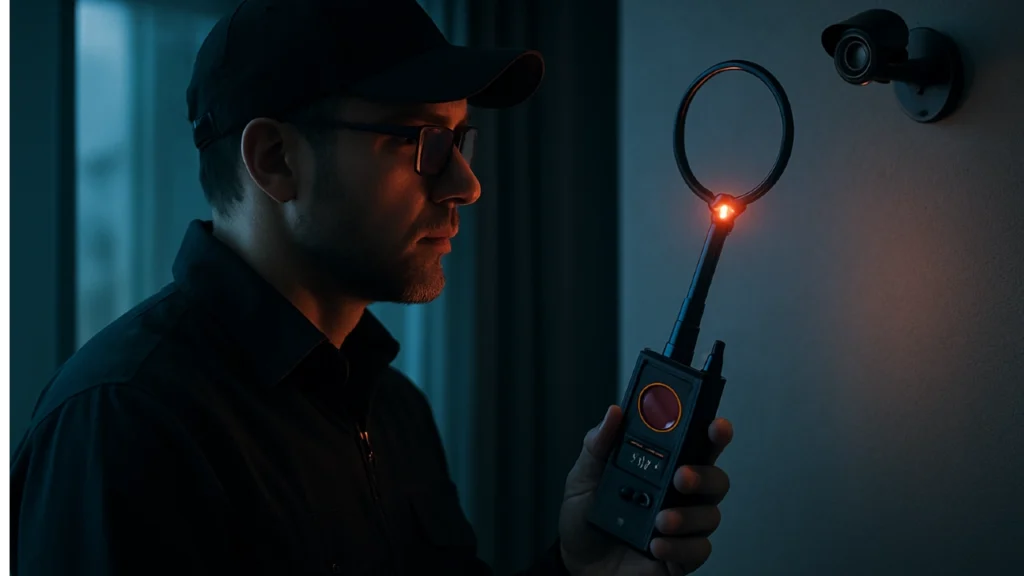
TSCM Services Michigan: Professional Bug Sweeps and Electronic Surveillance Detection
Concerned about electronic surveillance threatening your privacy, security, or confidential communications in Michigan? Metro Detective Agency provides professional Technical Surveillance Counter-Measures (TSCM) services throughout Michigan using advanced detection equipment, systematic methodologies, and investigative expertise to identify hidden surveillance devices and protect your sensitive information.
Our certified TSCM investigators combine state-of-the-art technology with decades of investigative experience to detect audio bugs, video cameras, GPS trackers, phone taps, computer monitoring, and other electronic surveillance devices. We offer comprehensive detection services for homes, offices, vehicles, and any location where your privacy may be compromised.
Understanding TSCM and Electronic Surveillance Threats
Technical Surveillance Counter-Measures (TSCM), commonly known as bug sweeps or electronic countermeasures, involves the detection and neutralization of electronic surveillance devices used to intercept private communications and activities.
What Is TSCM?
TSCM is the professional practice of detecting, identifying, and neutralizing technical surveillance threats including:
Audio surveillance devices (bugs) transmit or record conversations without authorization. Modern audio bugs range from simple recording devices to sophisticated transmitters broadcasting conversations to remote listeners. Audio bugs can be hidden in everyday objects, concealed in walls or furniture, or disguised as functional items.
Video surveillance devices (hidden cameras) capture visual activities without consent or knowledge. Hidden cameras can be miniaturized to fit in tiny spaces, disguised as common objects like smoke detectors or clocks, or concealed in structural elements. Video surveillance violates privacy and can capture sensitive activities or confidential information.
GPS tracking devices monitor vehicle or personal movements without authorization. GPS trackers reveal travel patterns, locations visited, meeting attendees, and daily routines. Unauthorized GPS tracking violates privacy and can facilitate stalking, corporate espionage, or other harmful activities.
Telephone interception captures phone conversations through wiretaps, phone bugs, or compromised telecommunications equipment. Phone interception reveals confidential business discussions, personal conversations, and sensitive information shared by phone.
Computer and network surveillance monitors computer activities, captures keystrokes, intercepts network communications, or accesses stored information without authorization. Computer surveillance reveals passwords, confidential documents, emails, financial information, and all computer activities.
Mobile device surveillance monitors smartphones and tablets through spyware applications, compromised operating systems, or physical bugs. Mobile surveillance captures calls, text messages, emails, photos, location data, and all smartphone activities.
Wireless signal interception captures data transmitted over Wi-Fi, Bluetooth, or other wireless protocols. Wireless interception reveals network communications, file transfers, and information transmitted wirelessly.
TSCM services detect these diverse surveillance threats through systematic technical inspection and advanced detection equipment.
Why Electronic Surveillance Threatens You
Electronic surveillance poses serious threats to individuals, businesses, and organizations across Michigan.
Privacy violations from unauthorized surveillance intrude on personal and professional privacy. Surveillance captures private conversations, intimate activities, confidential discussions, and sensitive information that should remain private.
Business espionage uses electronic surveillance to steal trade secrets, confidential business information, strategic plans, customer data, financial information, and competitive intelligence. Corporate espionage causes significant financial losses and competitive disadvantages.
Legal and regulatory exposure results when confidential information captured through surveillance is disclosed. Businesses face liability for data breaches, privacy violations, and failure to protect confidential information. Individuals face exposure of sensitive personal information.
Relationship damage occurs when private conversations or activities are monitored and disclosed. Surveillance in divorce cases, custody disputes, or personal relationships causes significant emotional harm and legal complications.
Security threats arise when surveillance reveals security procedures, access controls, alarm codes, or other security information enabling physical intrusions or attacks.
Competitive disadvantages result when competitors obtain confidential business information through surveillance. Knowledge of pricing strategies, customer relationships, product development, or business strategies provides unfair competitive advantages.
Personal safety risks increase when surveillance reveals daily routines, travel patterns, home security, or personal vulnerabilities. Stalkers, criminals, and other threats use surveillance information to plan harmful activities.
Blackmail and extortion leverage sensitive information captured through surveillance. Perpetrators threaten to disclose embarrassing or damaging information unless demands are met.
Loss of negotiating position occurs when surveillance reveals negotiation strategies, bottom-line positions, or confidential information affecting business deals, legal settlements, or other negotiations.
Electronic surveillance poses serious threats requiring professional TSCM services for detection and protection.
Who Conducts Electronic Surveillance?
Electronic surveillance is conducted by diverse parties with various motivations.
Suspicious spouses install surveillance devices to monitor partners suspected of infidelity. Spouses bug homes, vehicles, and personal belongings to gather evidence of affairs or deceptive behavior.
Business competitors conduct corporate espionage using electronic surveillance to steal confidential business information, trade secrets, and competitive intelligence. Competitors plant bugs in offices, conference rooms, and vehicles to intercept business communications.
Disgruntled employees install surveillance devices to gather information for lawsuits, blackmail, or competitive advantage before leaving employment. Employees with access to facilities can easily plant surveillance devices.
Private investigators working for opposing parties in legal matters, business disputes, or personal conflicts may use electronic surveillance (though ethical investigators avoid illegal surveillance).
Criminals use surveillance for robbery planning, identity theft, blackmail, or other criminal purposes. Criminals surveil targets to identify vulnerabilities and gather information facilitating crimes.
Stalkers and harassers monitor victims through electronic surveillance tracking movements, monitoring communications, and gathering information about daily activities and relationships.
Foreign intelligence services conduct surveillance targeting businesses, government facilities, and individuals with access to sensitive information or technology.
Landlords and property owners sometimes illegally monitor tenants through hidden cameras or audio devices.
Domestic abusers use surveillance to monitor and control victims, track their movements, and intercept their communications.
Curious individuals with access to locations may install surveillance devices out of voyeurism or inappropriate curiosity.
The accessibility of surveillance technology means anyone with motivation and opportunity can conduct electronic surveillance, making TSCM services essential for protection.
Signs You May Be Under Surveillance
Certain indicators suggest possible electronic surveillance requiring professional TSCM inspection.
Suspicious behavior by individuals with access to your locations including unusual interest in your schedule, activities, or communications may indicate surveillance planning or device placement.
Unexplained knowledge of private conversations, activities, or information that should be confidential suggests possible surveillance. When others know things they shouldn’t, surveillance may be the source.
Physical evidence including disturbed areas, moved furniture, new objects appearing in locations, holes in walls or ceilings, or signs of entry to locked areas may indicate surveillance device installation.
Electronic interference such as strange sounds during phone calls, static or clicking noises, unusual echoes, or volume changes may indicate phone taps or audio surveillance.
Battery drain on mobile devices faster than normal usage patterns explain may indicate spyware or surveillance applications running in the background.
Unusual vehicle behavior including vehicles consistently appearing near your locations, following your routes, or parking near your home or office may indicate surveillance operations.
Technology malfunctions including unexplained computer behavior, strange network activity, or devices acting unusually may indicate computer surveillance or network compromise.
Relationship or business conflicts creating motivation for surveillance including divorces, custody disputes, business disputes, employment terminations, or competitive situations increase surveillance risks.
Sensitive information or activities making you a valuable surveillance target including confidential business information, high-value negotiations, sensitive legal matters, or valuable intellectual property increase surveillance likelihood.
Intuition and concern about being monitored should not be dismissed. Many surveillance victims report feeling watched before discovering actual surveillance devices.
If you notice these indicators, professional TSCM services can determine whether surveillance devices are present.
Comprehensive TSCM Services
Professional TSCM services provide systematic detection of electronic surveillance devices through advanced technology and expert methodologies.
Physical Inspection and Search
Comprehensive physical inspection forms the foundation of effective TSCM services.
Visual inspection examines all areas for surveillance devices, suspicious objects, signs of tampering, or physical evidence of device installation. TSCM professionals systematically inspect every area including walls, ceilings, floors, furniture, fixtures, electrical outlets, phone jacks, computers, and all objects where devices could be hidden.
Physical inspection identifies many surveillance devices through careful visual examination by experienced professionals who recognize surveillance equipment and installation signs.
Structural inspection examines building structures for concealed surveillance devices. TSCM professionals inspect walls, ceilings, floors, and structural elements for hidden devices, examine ventilation systems and ductwork, inspect electrical and telecommunications infrastructure, and identify structural modifications suggesting device installation.
Structural inspection reveals devices concealed within building elements beyond casual observation.
Object inspection examines all objects and furnishings for hidden surveillance devices. TSCM professionals inspect furniture, decorations, electronics, office equipment, personal items, and all objects where miniature surveillance devices could be concealed.
Object inspection identifies devices hidden in everyday items that appear normal but contain surveillance equipment.
Disassembly inspection involves partial disassembly of suspicious objects, fixtures, or equipment for internal inspection. TSCM professionals carefully disassemble and inspect telephones, electrical outlets, light fixtures, smoke detectors, computers, and other items where devices may be internally concealed.
Disassembly inspection reveals devices hidden inside functional objects that external inspection cannot detect.
Vehicle inspection examines vehicles for GPS trackers, audio bugs, and video surveillance. TSCM professionals inspect vehicle exteriors and undercarriages, examine interior spaces and upholstery, inspect electronic systems and wiring, and use specialized equipment detecting vehicle surveillance devices.
Vehicle inspection protects against surveillance targeting transportation and travel patterns.
Physical inspection and search provide essential detection capabilities identifying many surveillance devices through systematic examination.
Electronic Detection and Analysis
Advanced electronic detection equipment identifies surveillance devices through their electronic signatures and transmissions.
RF (Radio Frequency) detection identifies transmitting surveillance devices broadcasting audio, video, or data signals. TSCM professionals use spectrum analyzers scanning wide frequency ranges, RF detectors identifying transmitting devices, directional antennas locating transmission sources, and signal analysis equipment characterizing detected signals.
RF detection identifies bugs, hidden cameras, and other devices transmitting information wirelessly to remote receivers.
Non-linear junction detection (NLJD) identifies electronic devices regardless of whether they’re transmitting. NLJD equipment detects semiconductor junctions present in all electronic devices, identifying surveillance devices even when powered off or not transmitting. TSCM professionals use NLJD to sweep walls, furniture, objects, and structures for hidden electronic devices.
NLJD detection finds surveillance devices that RF detection cannot identify because they’re not actively transmitting.
Thermal imaging detects heat signatures from electronic devices. Surveillance devices generate heat during operation that thermal imaging cameras can detect. TSCM professionals use thermal imaging to identify hidden devices behind walls, in ceilings, or concealed in objects through their heat signatures.
Thermal imaging reveals operating surveillance devices through thermal signatures invisible to normal inspection.
Carrier current detection identifies surveillance devices using electrical wiring for transmission. Some bugs transmit signals through electrical wiring rather than radio frequencies. TSCM professionals use specialized equipment detecting carrier current transmissions in electrical systems.
Carrier current detection identifies bugs using wiring-based transmission methods that RF detection misses.
Infrared detection identifies hidden cameras through their infrared signatures. Many hidden cameras use infrared illumination for low-light recording. TSCM professionals use infrared detectors and cameras identifying infrared sources indicating hidden cameras.
Infrared detection reveals hidden cameras through their infrared emissions.
Lens detection identifies camera lenses through optical reflections. TSCM professionals use specialized lens detectors that illuminate areas and identify camera lens reflections, revealing hidden cameras regardless of whether they’re operating.
Lens detection finds hidden cameras through optical characteristics rather than electronic signatures.
Acoustic analysis examines audio characteristics identifying phone taps and audio surveillance. TSCM professionals analyze phone line audio for tap indicators, examine room acoustics for audio anomalies, and use specialized equipment detecting ultrasonic and subsonic surveillance signals.
Acoustic analysis identifies audio surveillance through sound characteristics and anomalies.
Electronic detection and analysis provide advanced capabilities identifying surveillance devices through their electronic, thermal, optical, and acoustic signatures.
Telecommunications Analysis
Telecommunications systems require specialized analysis for surveillance detection.
Telephone line analysis examines phone lines for wiretaps and interception devices. TSCM professionals measure line voltages and impedances, analyze line balance and capacitance, identify voltage drops indicating taps, examine line connections and junction boxes, and use Time Domain Reflectometry (TDR) detecting line anomalies.
Telephone line analysis identifies wiretaps and phone bugs affecting landline communications.
PBX and phone system inspection examines business phone systems for unauthorized access or surveillance. TSCM professionals inspect PBX equipment and configurations, examine call routing and forwarding, identify unauthorized access or modifications, analyze system logs for suspicious activities, and inspect phone equipment and connections.
PBX inspection protects business telecommunications from surveillance and unauthorized access.
Mobile device analysis examines smartphones and tablets for spyware and surveillance applications. TSCM professionals analyze installed applications for spyware, examine device configurations and permissions, identify suspicious background processes, analyze network connections and data usage, and use specialized tools detecting mobile surveillance.
Mobile device analysis protects smartphones from surveillance applications and compromises.
Network analysis examines computer networks for surveillance and unauthorized access. TSCM professionals analyze network traffic for suspicious communications, identify unauthorized devices on networks, examine network configurations and access controls, analyze firewall and router logs, and use network monitoring tools detecting surveillance.
Network analysis protects computer networks from surveillance and unauthorized monitoring.
VoIP analysis examines Voice over IP communications for interception and surveillance. TSCM professionals analyze VoIP configurations and security, examine VoIP traffic for interception, identify unauthorized VoIP access, and assess VoIP encryption and protection.
VoIP analysis protects internet-based communications from surveillance and interception.
Telecommunications analysis provides specialized capabilities protecting phone systems, mobile devices, and network communications from surveillance.
Computer and Digital Device Inspection
Computers and digital devices require specialized inspection for surveillance detection.
Computer forensic inspection examines computers for monitoring software, keyloggers, and surveillance applications. TSCM professionals analyze installed software and processes, identify monitoring and surveillance applications, examine system configurations and permissions, analyze network connections and communications, inspect for hardware keyloggers and devices, and use specialized forensic tools detecting computer surveillance.
Computer forensic inspection protects computers from surveillance software and hardware.
Firmware and BIOS analysis examines low-level system software for surveillance implants. TSCM professionals analyze BIOS and firmware for modifications, identify rootkits and persistent threats, examine boot processes for anomalies, and use specialized tools detecting firmware-level surveillance.
Firmware analysis detects sophisticated surveillance operating below normal security tools.
Peripheral device inspection examines computer peripherals for surveillance capabilities. TSCM professionals inspect keyboards for keyloggers, examine mice and input devices, inspect USB devices and connections, analyze printers and scanners, and identify surveillance capabilities in peripheral devices.
Peripheral inspection identifies surveillance devices disguised as or hidden in computer accessories.
Wireless device inspection examines wireless keyboards, mice, and other devices for interception vulnerabilities. TSCM professionals analyze wireless communications security, identify interception vulnerabilities, examine wireless encryption and protection, and assess wireless device security.
Wireless device inspection protects against interception of wireless computer communications.
Computer and digital device inspection provides comprehensive protection against diverse computer surveillance threats.
Documentation and Reporting
Professional TSCM services include comprehensive documentation and reporting.
Detailed inspection reports document all inspection activities, findings, and recommendations. TSCM professionals provide written reports describing inspection scope and methodology, documenting all areas and systems inspected, detailing any surveillance devices discovered, including photographs and technical documentation, providing technical analysis of discovered devices, and offering security recommendations.
Detailed reports provide complete documentation of TSCM services and findings.
Device analysis and documentation provides technical information about discovered surveillance devices. TSCM professionals photograph and document devices, analyze device capabilities and specifications, identify device manufacturers and models when possible, determine device operational characteristics, and assess device sophistication and likely sources.
Device documentation provides evidence and intelligence about surveillance operations.
Evidence preservation maintains discovered devices as evidence for legal proceedings. TSCM professionals preserve devices using proper evidence handling, maintain chain of custody documentation, protect device integrity for forensic analysis, and coordinate with law enforcement when appropriate.
Evidence preservation supports legal action against surveillance perpetrators.
Security recommendations provide guidance for preventing future surveillance. TSCM professionals recommend physical security improvements, suggest technical security measures, advise on access control and monitoring, recommend security policies and procedures, and provide ongoing security guidance.
Security recommendations help prevent future surveillance attempts.
Documentation and reporting provide comprehensive records of TSCM services supporting legal action and security improvements.
Metro Detective Agency TSCM Services in Michigan
Metro Detective Agency provides professional TSCM services throughout Michigan, protecting privacy and security through expert surveillance detection.
Our TSCM Expertise
Our TSCM investigators bring extensive experience and advanced capabilities to surveillance detection.
Advanced detection equipment includes spectrum analyzers, RF detectors, non-linear junction detectors, thermal imaging cameras, lens detectors, telephone analyzers, network analysis tools, and computer forensic equipment providing comprehensive detection capabilities.
Certified TSCM professionals with specialized training and certifications in technical surveillance countermeasures ensure expert service meeting professional standards.
Investigative experience combining TSCM expertise with decades of investigative experience provides insights into surveillance operations, perpetrator methods, and effective countermeasures.
Legal expertise ensures TSCM services comply with Michigan and federal laws, evidence is properly preserved, and findings support legal proceedings when necessary.
Diverse experience protecting homes, businesses, vehicles, legal offices, executive suites, conference rooms, and diverse locations throughout Michigan.
Our TSCM Approach
Metro Detective Agency conducts TSCM services through systematic, comprehensive methodologies.
Confidential consultation begins every engagement, understanding your concerns, situation, and specific surveillance risks before developing inspection plans.
Customized inspection plans address your specific locations, concerns, and risk factors rather than generic approaches.
Comprehensive inspection examines all relevant areas, systems, and devices using multiple detection methods ensuring thorough surveillance detection.
Systematic methodology follows proven TSCM procedures ensuring complete coverage and reliable results.
Advanced technology employs state-of-the-art detection equipment providing superior detection capabilities.
Detailed documentation provides complete records of inspections, findings, and recommendations.
Security guidance offers expert advice on preventing future surveillance and improving security.
Discreet service protects your privacy and maintains confidentiality throughout TSCM services.
Follow-up support provides ongoing consultation, periodic re-inspection, and continued security guidance.
Why Choose Metro Detective Agency
Metro Detective Agency offers distinct advantages for TSCM services in Michigan.
Licensed and insured professionals operating under Michigan Private Investigator License ensure legal compliance, professional standards, and accountability.
Advanced equipment and technology provide superior detection capabilities compared to basic bug sweep services.
Combined TSCM and investigative expertise enables comprehensive services from surveillance detection through perpetrator identification and legal support.
Proven track record successfully detecting surveillance and protecting privacy throughout Michigan.
Confidential and discreet service protects your privacy throughout TSCM services.
Transparent pricing with detailed proposals outlining scope, methodology, and costs without hidden fees.
Rapid response to urgent surveillance concerns and time-sensitive situations.
Statewide service throughout Michigan including Detroit, Grand Rapids, Ann Arbor, Lansing, and all Michigan communities.
Protect Your Privacy Today
Concerned about electronic surveillance threatening your privacy or security? Contact Metro Detective Agency today for confidential consultation about professional TSCM services in Michigan. Our certified TSCM investigators will assess your situation, explain our detection capabilities, and provide the expert bug sweep services you need to protect your privacy and security.
Don’t live with uncertainty about electronic surveillance. Professional TSCM services provide peace of mind through comprehensive detection using advanced technology and expert methodologies. Whether you’re concerned about home surveillance, business espionage, vehicle tracking, or any electronic surveillance threat, our TSCM professionals can detect devices and protect your privacy.
Call Metro Detective Agency now for immediate consultation about TSCM services protecting your privacy throughout Michigan.
Metro Detective Agency – Professional TSCM services and bug sweeps protecting privacy and security throughout Michigan.
Licensed • Experienced • Confidential • Professional